Governor races hinge on 18 to 18 split and nine battleground states
With 19 open seats and a nearly even partisan balance, the 36 governor races offer Democrats a rare shot at a nationwide majority they have not held since 2010.
By Larissa Shah ·
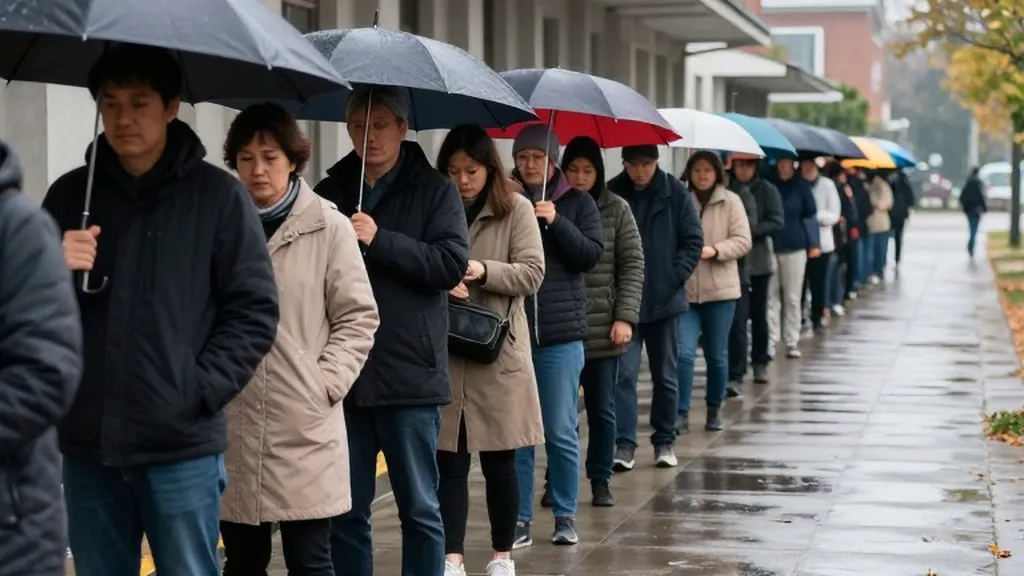
Voters across the country face a critical decision on Tuesday, November 3, 2026, as they choose governors in 36 states. The current partisan landscape is perfectly balanced, with Republicans holding 18 of the contested governorships and Democrats holding the other 18. This even split provides Democrats with a specific and achievable path to reclaiming a nationwide majority in state executive offices, a status they have not maintained since 2010. A net gain of just two governorships would shift the balance of power to the Democratic column, a prospect that party strategists have noted with cautious optimism as polls remain open.
The competitive nature of these races is amplified by the fact that 19 of the 36 governorships are open seats. 15 governors are term limited, forcing them out of contention regardless of their polling numbers. In addition, three incumbent governors chose not to run for re-election: Iowa’s Kim Reynolds, Minnesota’s Tim Walz, and Wisconsin’s Tony Evers. Rhode Island’s Daniel McKee, the fourth non-incumbent in this group, lost his primary race. These departures create a vacuum that both parties are aggressively filling, leading to heightened competition in states that have traditionally leaned one way or the other.
Nine states are identified by Ballotpedia as battlegrounds for the governor’s mansion: Alaska, Arizona, Georgia, Iowa, Kansas, Michigan, Nevada, Ohio, and Wisconsin. In these states, the margin of victory could be slim, and the outcome will likely hinge on local issues such as the cost of living and health care. The Associated Press notes that voters are struggling with high prices and are angry over an unpopular war with Iran, factors that have made these races particularly tight. For Democrats, the goal is not only to win these states but to hold their current governorships in states that Donald Trump won in 2024.
Democrats are defending five governorships in states that voted for President Trump in the 2024 presidential election. These include Arizona, where Governor Katie Hobbs faces a challenge, as well as Kansas, Michigan, Pennsylvania, and Wisconsin. In Pennsylvania, Governor Josh Shapiro is running for re-election in a state that has become increasingly competitive. Republicans, meanwhile, are defending two governorships in states that voted for Kamala Harris in 2024: New Hampshire and Vermont. In New Hampshire, Governor Kelly Ayotte is seeking another term, while in Vermont, Governor Phil Scott is running again in a state that has trended Democratic in recent years.
The Associated Press highlights several named matchups that are drawing national attention. In Georgia, Republican health care executive Rick Jackson is running against Democratic former Atlanta Mayor Keisha Lance Bottoms to succeed Brian Kemp. In Nevada, Republican Governor Joe Lombardo faces Democratic Attorney General Aaron Ford. In Ohio, Republican Vivek Ramaswamy is competing against Democrat Amy Acton. Ramaswamy’s campaign recently faced backlash over an advertisement featuring Acton’s estranged mother, a moment that has intensified the local debate. The AP also identifies Texas, Florida, and Iowa as competitive governor races, although these states are not on Ballotpedia’s list of nine battlegrounds, suggesting that the lines of contention may shift as votes are counted.
Financial dynamics play a significant role in these races, with the 2026 elections likely to be the most expensive in history. Republican committees have outraised and outspent their Democratic counterparts, aided by Trump-affiliated groups and contributions from Elon Musk. However, at the candidate level, Democrats have outraised their opponents. This discrepancy highlights the strategic focus of Democratic fundraising efforts on specific races where they can make a difference. The money spent on television advertising is heavily concentrated in states and districts that Trump won in 2024, with 88.1% of Republican general election TV ad spending going to those areas.
Redistricting has also shaped the political landscape for these governor races, although the direct impact is less clear than in congressional districts. Six states are using new congressional maps after mid-decade redistricting: California, Florida, Missouri, North Carolina, Tennessee, and Texas. Ohio is also using a new map. While these changes primarily affect House elections, they have influenced the political climate in these states, potentially altering voter turnout and engagement. Republicans tried to use redistricting to beat the historical midterm pattern where a president’s party almost always loses seats, but the effectiveness of this strategy in governor races remains to be seen.
The mood among voters is one of frustration and uncertainty. AP-NORC polling shows that 35% of U.S. Adults approve of Trump’s job performance, while only 25% approve of his handling of the economy. About 7 in 10 respondents say the country is heading in the wrong direction, with most blaming the president for high prices. This sentiment is driving voter engagement, with more than 57 million people having already voted as of Monday. This number surpasses the early vote of four years ago in many closely watched states, indicating a high level of participation that could be decisive in the tight governor races.
Democratic leadership is focused on the potential for a strong showing in these races to boost their control of Congress and strengthen their hand for the 2028 presidential cycle. A win in even one chamber of Congress would likely lead to increased investigations and possible impeachment proceedings. House Democratic Leader Hakeem Jeffries, who would be the first Black speaker if Democrats take the House, has outlined a 100-day agenda focused on the cost of living and oversight. A strong performance in the governor races would also bolster the prospects of potential 2028 candidates such as Gavin Newsom, JB Pritzker, and Pete Buttigieg.