Democrats seize both chambers in historic sweep, setting stage for Trump oversight
Voters rejected the administration's war and cost of living, handing Democrats control of the House and Senate to launch immediate probes into the president's business dealings.
By Larissa Shah ·
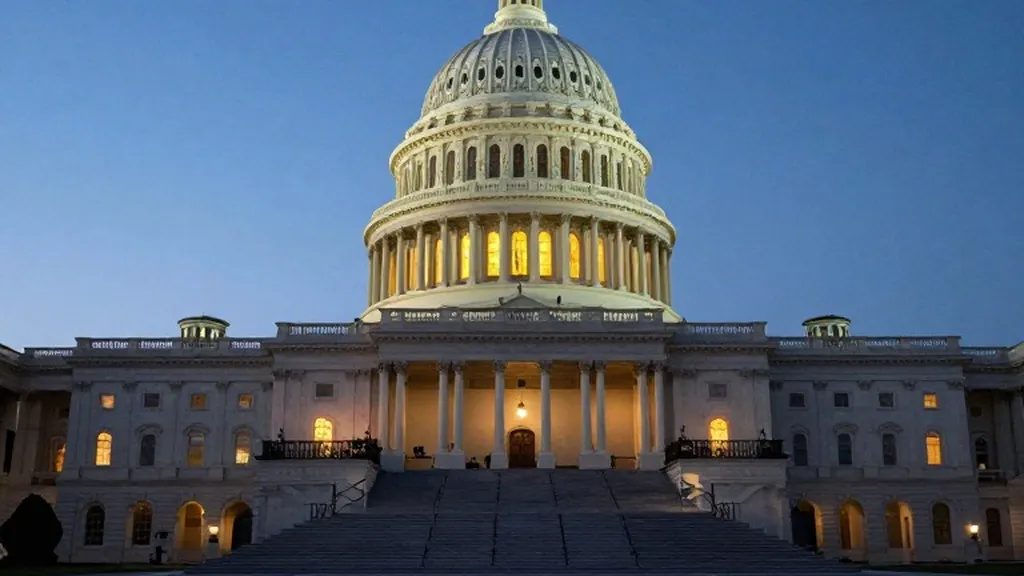
Democrats have secured control of both the U.S. House of Representatives and the U.S. Senate in a sweeping midterm victory that signals a decisive shift in power for the next two years. The results, confirmed across all 435 House districts and 35 Senate races, show Democrats gaining a net of 33 House seats and 7 Senate seats. This outcome overturns the Republican majorities held since the 2024 elections, placing the party in a position to check the administration immediately. The victory marks a significant reversal for President Donald Trump, whose party had previously maintained dominance in Congress despite high approval ratings in certain regions.
The shift in the Senate is particularly notable, as Democrats flipped seven seats from Republican control to regain the majority. Previously, Republicans held a 53 to 47 advantage in the upper chamber. Now, with 20 Democratic wins against 13 Republican wins in the contested seats, the balance has tipped. In the House, Democrats captured 238 seats compared to 146 for Republicans, a margin that exceeds the net gain of three seats they needed to reclaim the chamber. This decisive margin provides the new leadership with the resources to expand investigative staffs and issue subpoenas without immediate procedural hurdles.
Sen. Chuck Schumer, who is poised to return as Senate majority leader, emphasized that the electorate demanded action on government corruption. He stated that Americans want the government to clean up corruption, noting that no citizen should have to trade off at the supermarket while the president makes inside trades on the stock market. This sentiment mirrors the concerns of House leader Hakeem Jeffries of New York, who is set to become the next speaker. Jeffries has not ruled out a third impeachment effort against Trump, linking the president's self-enrichment to the affordability issues facing American households.
Rep. Robert Garcia of California, the ranking Democrat on the Oversight and Government Reform Committee, outlined a five-point priority list for the new majority. These priorities include an investigation into Trump family business dealings, the administration's handling of the Jeffrey Epstein investigation, and the operations of Immigration and Customs Enforcement. Garcia posted on social media that the new majority should lawyer up, signaling an aggressive start to the oversight agenda. Rep. Jamie Raskin of Maryland, who will lead efforts in the Judiciary Committee, will work alongside Garcia to link public corruption to the economic pressures voters cited in their decision to vote.
The election results also reflect deep dissatisfaction with the administration's management of the war in Iran, which has contributed to elevated gas prices and rising costs in nearly every sector. Exit polls indicated that record Election Day diesel and gasoline prices helped push voters toward Democrats, with many citing the cost of living as a primary factor. President Trump, who has threatened to return to a full-scale bombardment of Iran if Tehran does not reach a settlement, now faces a Congress that may scrutinize his military decisions. The war has caused tens of billions of dollars in damage in the region, a cost that voters have directly felt in their pocketbooks.
In the House, the defeat of the Republican redistricting effort was a key component of the Democratic win. The unprecedented national Republican effort to reshape U.S. House districts failed as the party's intended seawall was swept aside by the Democratic vote. Six states used different congressional maps for the 2026 election than they did in 2024, including California, Florida, Missouri, North Carolina, Tennessee, and Texas. Despite these changes, Democrats outperformed expectations, winning in districts that were previously considered safe Republican territory. This performance suggests a broader national mood rather than a localized reaction to specific map changes.
The election also produced historic firsts and a reshaping of political leadership. Abdul El-Sayed won the U.S. Senate seat in Michigan, becoming the first Muslim American U.S. senator. His victory was celebrated by Arab and Muslim Americans, who noted his use of the term habibi in his victory speech to address Vice President JD Vance. El-Sayed’s win in a state that President Trump won in the 2024 election underscores the strength of the Democratic wave. Other notable gains include the election of women and candidates of color, who reshaped the face of political leadership in both chambers of Congress.
Governors' races also saw significant shifts, with Democrats gaining a net of five governorships to take control of 22 of the 36 offices up for election. This includes wins in Georgia, Iowa, Ohio, and Texas, where the party flipped seats previously held by Republicans. The control of these statehouses provides Democrats with additional leverage in the 2028 presidential cycle. The party now holds a trifecta in several states, including Arizona, where they gained control of both the state Senate and House. This expanded footprint allows for coordinated policy pushes on issues such as data center regulations and healthcare costs.
With the new majority in place, Democrats are expected to focus on legislation that addresses the affordability crisis. The party plans to use its committee chairs to investigate how the Trump family has become wealthier since the president returned to office. This oversight will involve a sprawling effort across multiple committees, including those with authority over Cabinet officials. The new leadership is also preparing for potential standoffs over the government's borrowing limit, a risk that investors have already begun to price into the markets. The focus on fiscal discipline and corruption probes is intended to hold the administration accountable while crafting a platform for the 2028 campaign.