Courts intervene as USPS ramps up mail ballot processing
Federal judges blocked administration efforts to segregate ballots and target noncitizens, while postal workers added staff and hours to ensure timely counting.
By Marco Graham ·
A federal judge issued a temporary order on Monday that blocked the Trump administration from executing a plan designed to prevent noncitizen voting. The ruling came as election officials across the country prepared for a high-stakes midterm contest that will determine which party controls Congress for the remainder of the president's second term. Critics of the administration's approach argued that the plan posed a risk of disenfranchising eligible voters and infringed upon the authority of states to manage their own elections. The legal intervention added a layer of complexity to an election day already marked by intense scrutiny over voting rules and administrative procedures.
In a related development, another judge ordered the administration to stop demanding that California election officials segregate ballots cast by individuals appearing on lists of suspected noncitizens. This order provided relief to state workers who had been preparing to implement the federal directive. The California case is one of two significant lawsuits filed by the administration in Alaska and California regarding the certification of results. The Justice Department has also threatened to prosecute local election officials, a move that has led Democrats to voice concerns about potential interference and intimidation during the final hours of voting.
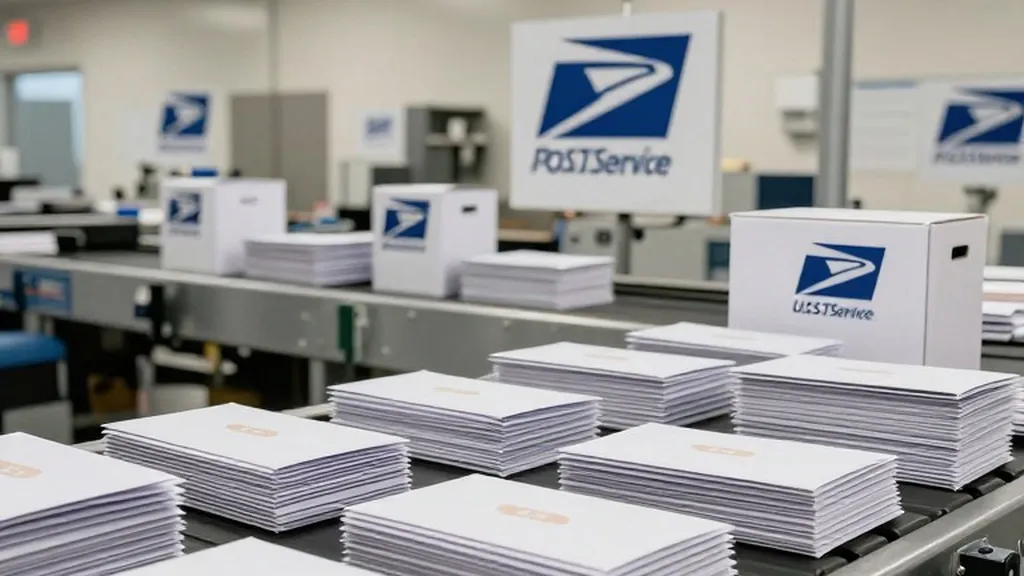
While legal battles unfolded in the courts, the United States Postal Service took concrete steps to ensure that mail-in ballots were counted on time. The agency added extra hours to the workday and increased staffing levels at processing facilities. Special lines were established to prioritize the handling of election mail. These measures were critical in states where a large portion of the vote is cast by mail, such as California, Colorado, Hawaii, Nevada, Oregon, Utah, Vermont, and Washington. The Postal Service's actions aim to mitigate delays and ensure that ballots received before the deadline are tallied accurately.
The focus on administrative details is heightened by the sheer scale of this year's election. More than 57 million people had already voted as of Monday, surpassing the early vote totals from four years ago in many closely watched states. The Associated Press describes the election as a referendum on the president's second term, with voters grappling with high prices and expressing anger over an unpopular war with Iran. The stakes are high, as Democrats need a net gain of four Senate seats to reclaim a majority, while Republicans can afford to lose only two. In the House, Democrats need a net gain of three districts to take control, a threshold that hinges on performance in 46 battleground districts.
The legal and administrative challenges occur against the backdrop of a significant financial disparity between the parties. Republican committees have outraised and outspent their Democratic counterparts, aided by Trump-affiliated groups and Elon Musk. However, at the candidate level, Democrats have managed to outraise their opponents. The Associated Press notes that 88.1 percent of Republican general election TV ad spending went to states and districts where President Trump won in 2024. This spending strategy reflects an effort to solidify support in areas where the party has a stronger base, while Democrats focus on competitive districts where small margins could decide control of the House.
The mood among voters is characterized by a mix of frustration and cautious optimism. A recent AP-NORC poll indicates that 35 percent of U.S. adults approve of President Trump's job performance, while only 25 percent approve of his handling of the economy. About seven in ten respondents said the country is heading in the wrong direction, with most blaming the president for high prices. Voters like James Moore, a librarian in Raleigh, North Carolina, cited rising taxes and healthcare costs as primary concerns. In contrast, voter Mark Barker of Palm Beach Gardens, Florida, expressed confidence in the president's leadership, highlighting the divided landscape of the electorate.
The Senate race is particularly contentious, with 13 battlegrounds identified by Ballotpedia. In Alaska, the Trump administration filed a lawsuit related to the certification of the Senate result, adding another legal front to the election. The state is rated as a toss-up to lean Democratic, a shift that has caught the attention of national parties. In Maine, economic strain and tariffs have made the race between Senator Susan Collins and Democratic challenger Troy Jackson highly competitive. The Associated Press notes that these factors have turned traditionally less volatile states into key sites for the fight over Senate control.
Governor's races also present a critical opportunity for Democrats to secure a nationwide majority for the first time in two decades. Republicans currently hold 26 governor's offices, while Democrats hold 24. In the 36 races on the ballot, each party holds 18 of the contested seats. Democrats need a net gain of two governorships to achieve a majority, a goal that depends on holding their five defensive races in states Trump won in 2024. These include Arizona, Kansas, Michigan, Pennsylvania, and Wisconsin. The outcome of these races will influence the balance of power in state legislatures and potentially impact future redistricting efforts.
As polls open across the country, the interplay between legal rulings and administrative logistics will be closely monitored. The temporary bar on the noncitizen voting plan and the order to stop segregating ballots in California provide immediate clarity for election officials, but the underlying legal disputes may continue after the votes are counted. The Postal Service's expanded operations ensure that mail ballots are processed efficiently, reducing the risk of delays that could affect the timeline for official results. These measures are essential for maintaining public confidence in the integrity of the election process.