Democrats Take Full Control of Congress and 28 Governorships
Voters rejected the president's party in a historic sweep, handing Democrats the House, the Senate, and sweeping statehouse victories.
By Larissa Shah ·
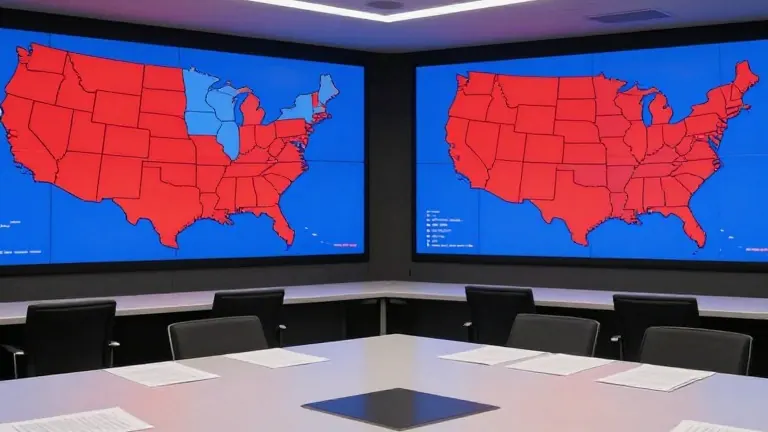
Washington, D.C. The 2026 midterm elections delivered a decisive mandate for change as Democrats secured full control of the U.S. Congress and expanded their grip on state governments nationwide. The party won 233 seats in the House of Representatives and 20 of the 35 contested Senate seats, ending two years of unified Republican control. This sweeping victory marks the largest single-election shift in partisan power at the state level since 2010, with Democrats now holding at least 28 governorships. The results reflect deep voter dissatisfaction with the administration's handling of the economy, the ongoing war in Iran, and the rising cost of living.
House Democratic Leader Hakeem Jeffries of New York addressed the party's victory, stating that the organization is ready to work hard to deliver the dramatic change voters demanded. Jeffries is poised to make history as the first Black speaker of the House when the new Congress convenes on January 3, 2027. He emphasized that the party hears the concerns of the electorate and intends to prioritize lowering the costs of gas, groceries, and other essential goods. The new majority also plans to reverse cuts to the Affordable Care Act and Medicaid, addressing key healthcare issues that have weighed on middle-class families for years.
The Senate results confirm a fundamental reshaping of power in Washington. Democrats gained control of the chamber, a significant achievement given that they needed a net gain of four seats to secure the majority. Seven seats changed party hands, all moving to Democratic control. Notable wins included victories in South Carolina and Kansas, states that had not elected a Democratic senator since 1932. In Texas, Democrats broke a decades long streak of Republican dominance in statewide races, further underscoring the breadth of the partisan shift. These victories set the stage for a divided government where Congress is expected to reassert itself as a coequal branch.
Statewide races mirrored the federal trends, with Democrats achieving trifectas in several battleground states. In Texas, the party took control of the state House for the first time since 2002 and elected Gina Hinojosa as the first Democratic governor since 1994. Similar gains occurred in Michigan, Minnesota, Pennsylvania, and Nevada, where Democrats secured full control of both legislative chambers and the governor's office. Heather Williams, president of the Democratic Legislative Campaign Committee, described the outcome as historic levels of power in statehouses, noting that the party had not flipped so many seats nationwide since the 1980s. These state victories provide Democrats with additional leverage to influence policies on tax rates, education funding, and healthcare access.
The Republican redistricting efforts, urged by President Trump in eight states, ultimately failed to preserve the party's congressional majority. Republicans lost most of the Democratic-held seats they had targeted for flipping, along with other seats they had banked on retaining. Former Attorney General Eric Holder, chair of the National Democratic Redistricting Committee, stated that the Republican plan was systematically dismantled by voters who chose to elect a new Democratic majority. In Texas, specific reconfigured districts in the Rio Grande Valley did not prevent Democratic Reps. Henry Cuellar and Vicente Gonzalez from winning reelection. Instead, Democrats unseated Republican Rep. Monica De La Cruz, highlighting the impact of shifting voter demographics and dissatisfaction with the current administration.
Voter discontent with the war in Iran and soaring fuel prices played a central role in the election outcome. The AP Voter Poll indicated that a substantial majority of voters disapproved of how President Trump was handling the presidency, with about six in ten expressing negative views. The war had sent fuel prices soaring, creating a major source of frustration for voters across the country. British Prime Minister Andy Burnham expressed hope that the election results would focus minds in Washington on ending the conflict. In the U.S., the cost of groceries, housing, and utility bills dominated campaign conversations, with Democrats promising to force utilities and data center developers to do more to stop electricity bills from rising. This focus on kitchen table issues resonated with a electorate that felt the administration was prioritizing other concerns.
President Trump responded to the results with a mix of conciliation and deflection. He suggested he could work with the new Democratic leadership but warned of potential gridlock, threatening to use the presidential veto to strike down their agenda. In an interview, Trump said he did not want to sit around for two years vetoing everything. However, he also maintained that he was not on the ballot and that voters had simply not liked the Republican candidates. The AP Voter Poll suggested that Trump's presence was a drag on GOP candidates, with majorities in losing states saying the Republican Senate candidates were too supportive of the unpopular president. This dynamic highlighted the challenge Republicans faced in balancing their loyalty to the president with the need to appeal to a broad electorate.
The new Congress is expected to launch a robust oversight agenda to hold the administration accountable. House Oversight Committee top Democrat Robert Garcia issued a warning to the White House, telling them to lawyer up. Senate Finance Committee top Democrat Ron Wyden issued a similar message, focusing on subpoenas. These actions signal an intent to investigate the administration's policies and spending, particularly regarding the war in Iran and domestic economic measures. The party also plans to push for a 100 day agenda that includes efforts to improve educational opportunities and increase access to healthcare, particularly in rural areas. This legislative push will test the ability of the divided government to produce meaningful policy changes in the coming year.