Democrats take Senate seats in Trump strongholds, reshaping 2028 presidential calculus
Voters in five states previously won by President Trump in 2024 elected Democratic senators, including a historic first in Texas, forcing both parties to reassess their geographic strategies.
By Amina Kaminski ·
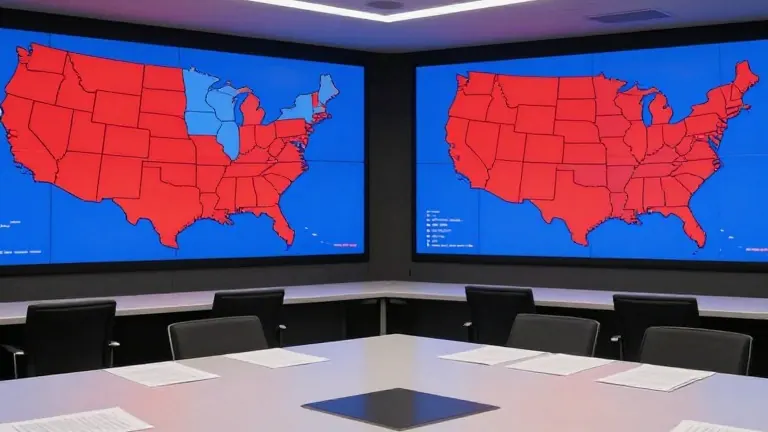
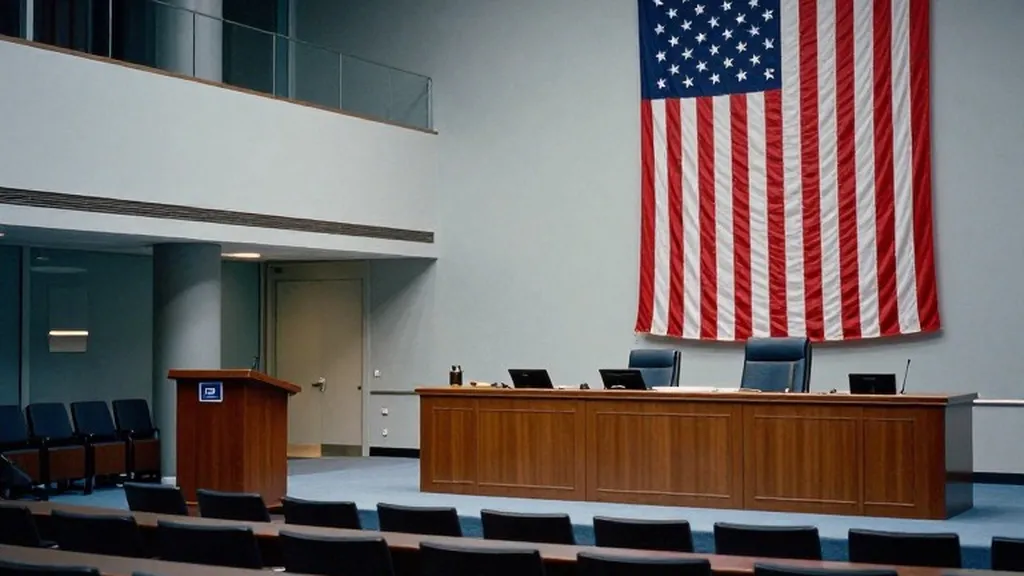
The decade-long stability of the American political map shattered on Tuesday as voters in five states that President Donald Trump won comfortably in 2024 elected Democratic candidates for the U.S. Senate.
In Kansas, South Carolina, Texas, Ohio, and Iowa, Democrats secured Senate victories, while also winning gubernatorial races in several of those states. This performance broke the pattern of a stagnant map dominated by a small number of swing states.
The most consequential change occurred in Texas, where Democrats won a Senate race for the first time in 38 years. They also defeated three-term Republican Governor Greg Abbott and took control of the state House. This marked the most substantial shift in political power since the 1974 elections following Watergate.
Texas Republican strategist David Polyansky noted that the results could force Democrats to pursue the state’s 40 electoral votes in the next presidential race. Only California holds more electoral votes. Polyansky stated that such a move would cost Republicans millions of dollars and significant manpower to defend.
Joshua Huder, a political scientist at Georgetown University, said the shift requires Democrats to engage with issues vital to the red center of the country, such as the farm bill, to maintain their new seats. He asked whether the party is willing to compete in Kansas, Iowa, and Texas, noting that doing so would fundamentally change American politics.
Democratic strategists cautioned that the path to the presidency will not be redrawn overnight. Most of Tuesday’s results stemmed from high unpopularity of President Trump and voter dissatisfaction with the cost of living. However, the party can now begin building organizational structures in conservative states that it has not maintained for more than 10 years.
Alan Abramowitz, a political scientist at Emory University, described the election as a breakthrough driven by strong discontent with current policies. He warned that the country remains deeply polarized, with supporters of each party viewing the other as a threat. He did not expect the current level of volatility to last indefinitely.
Jim Messina, who managed Barack Obama’s 2012 reelection team, said Democrats will use this period to build local apparatus in Texas while analyzing the path to 2028. John Anzalone, a Democratic pollster who advised former North Carolina Governor Roy Cooper, said the party will begin researching these states immediately. Anzalone explained that the party will conduct polling and focus groups to determine the rate of return on resources invested in these regions.
Democrats won despite being outspent across much of the country. The AP Voter Poll and AP VoteCast data show that Democrats fared better in 2026 relative to 2024 among white voters without college degrees, a group critical to Trump’s success in Iowa and Ohio. Republicans still won this demographic overall, but the gap narrowed.
In Iowa, the erosion of Republican support in rural areas was pronounced. In 2022, about 6 in 10 rural and small-town Iowa voters backed Republicans. This year, the split was closer as tariffs and high fuel prices weighed on farmers. Republican Ashley Hinson won just over half of rural voters, while Democratic candidate Josh Turek won about 4 in 10. Turek carried rural counties in eastern Iowa that no Democratic Senate candidate has held since Tom Harkin won in 2008.
Florida Governor Ron DeSantis, who is leaving office after his second term, acknowledged the volatility during a news conference on Wednesday. He noted that his successor, Representative Byron Donalds, won a narrow election despite the state’s conservative reputation. DeSantis said leaders must recognize that political dynamics shift quickly and that strategies from two years ago may not work today.
Republican strategist Kristin Davison urged her party not to panic. She advised members to analyze the results and chart a path forward, warning that those presuming 2028 implications immediately would need to make revisions.