Israel votes to end war deadlock
Voters choose between Benjamin Netanyahu and Gadi Eisenkot in a fragmented parliament where Arab parties may hold the balance of power.
By Larissa Shah ·
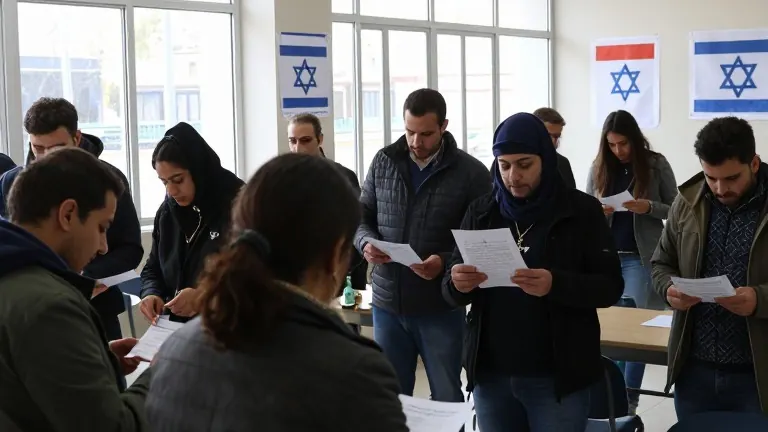
Israelis cast their ballots on Tuesday to decide the nation's next leader after three years of conflict. Prime Minister Benjamin Netanyahu faces a tight race against former military chief Gadi Eisenkot. The vote determines whether Netanyahu remains in power or if a new coalition forms to replace him.
Polls indicate no single party will command a majority in the 120-seat Knesset. This fragmentation means political leaders must negotiate with multiple parties to form a government. Nonaligned Arab parties are pushing for high turnout and could become kingmakers if they agree to support one side over the other.
Tensions remain high across the country. In Kiryat Shmona, a Netanyahu stronghold near the Lebanese border, a man tore down an Eisenkot poster before polls opened. In Tel Aviv, families of victims from the October 7, 2023 attack observed a moment of silence. Yona Adam, whose daughter Mapal Adam was killed, urged voters to remember those who are no longer around.
Netanyahu has intensified threats against Iran ahead of the election. He appeared in a video standing next to a missile-defense battery and warned Tehran of a devastating blow if it attacks Israel. The campaign has sharpened divisions over the state's direction, pitting religious and ultranationalist forces against secular and liberal values.
Supporters of Netanyahu view him as a steady hand who has guided Israel through multiple wars. They believe he protects Jewish identity while checking the judiciary. Critics argue he has prolonged the Gaza war for political reasons and weakened democratic institutions. They also accuse him of allowing ultra-Orthodox men to avoid compulsory military service.
Eisenkot, who lost his son and two nephews in Gaza, is viewed by supporters as a security expert capable of restoring stability. Parties likely to back him have pledged to conscript ultra-Orthodox men and bolster judicial independence. They also aim to improve Israel's international standing after recent sanctions from European partners.
The election marks the first national vote since the Hamas attack that sparked the current regional conflicts. Israel has faced increased isolation, with public support dropping in the United States and sanctions imposed by traditional allies. The outcome will determine how the country navigates its ongoing security and diplomatic challenges.