Gaza toll frames tight Israeli election
Polls show a dead heat in the 120-seat Knesset race as voters weigh a 19-year tenure against a 70,000 dead toll.
By Marco Graham ·
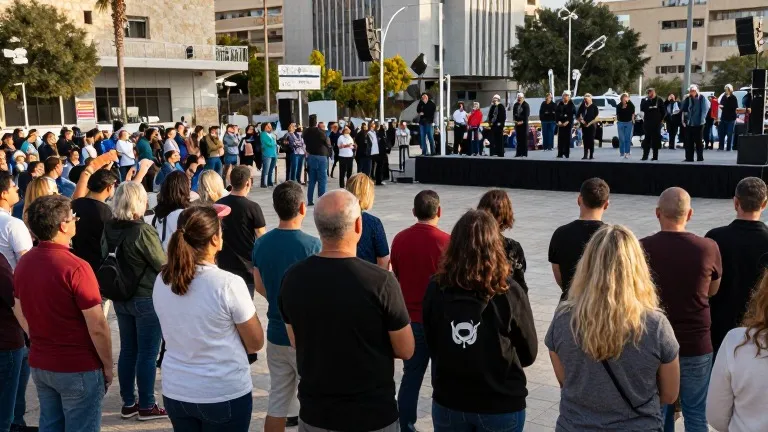
Israelis cast ballots on Tuesday in a contest defined by a single metric: the death toll in Gaza. More than 70,000 Palestinians have died in the conflict, a figure that anchors the political debate in a nation where the primary division is not ideological but personal. Polls indicate a near-identical split between those who support Prime Minister Benjamin Netanyahu and those who oppose him, creating a high-stakes race for the 120 seats in the Knesset.
The financial and political stakes hinge on a razor-thin margin. Forecasters predict the anti-Netanyahu bloc will outpoll the prime minister's camp but may lack the numbers for a governing majority. This forces a calculation over whether to form a coalition with the main Arab parties, which represent about one-fifth of the population. The result could depend on a single seat, a variable that has driven liberal and secular expatriates to fly home to vote. These voters are not captured in standard polling data, adding uncertainty to the final count.
The main challenger, Gadi Eisenkot, campaigns on a platform of direct action and term limits. A former military chief of staff and the son of working-class immigrants, Eisenkot proposes US-style restrictions on the number of terms a prime minister may serve. His party, Yashar, translates to straight or direct. At a rally in Modi'in, supporters praised his plain style. Noa Sadeh, 56, described her desire for a leader who focuses on execution rather than rhetoric, reflecting a fatigue with political showmanship.
Netanyahu, who has held the premiership for 19 of the last 30 years, campaigns on a binary choice between the right and Palestine. His posters place opposition leaders alongside heads of Palestinian citizen parties, a visual argument that has kept his rivals on the defensive. His campaign has also faced friction from his own media allies. This week, Channel 14 presenter Yinon Magal referred to Eisenkot as a Moroccan monkey, a slur that opposition speakers raised but Eisenkot chose to ignore.
The election outcome will determine the direction of policy on the West Bank, Gaza, and the judiciary. The far right, led by figures like Yishai Fleisher, demands more settlements, a ministry for the voluntary departure of Palestinians, and the death penalty. They argue Netanyahu has drifted left and must be pulled right. The prime minister faces a corruption trial and the fallout from his judicial overhaul, yet his loyal base remains intact. His allies maintain that intelligence chiefs kept him in the dark before the October 2023 attacks, a claim critics say lacks evidence.
The vote serves as a referendum on Netanyahu's longevity. He survived the deadliest attack in Israel's history and a war that did not eliminate Hamas, leaving the country's international standing strained. The opposition, including former prime minister Naftali Bennett, aims to form a government that prioritizes a regional strategic process for long-term security. The final tally will determine if the 19-year era of Netanyahu ends or if he secures another term through coalition maneuvering.