57 Million Early Votes Force Both Parties to Bet on Election Day Ground Game
With record early turnout and a tight race for Congress, Republican and Democratic chairs emphasize the critical importance of getting voters to the polls on Tuesday.
By Marco Graham ·
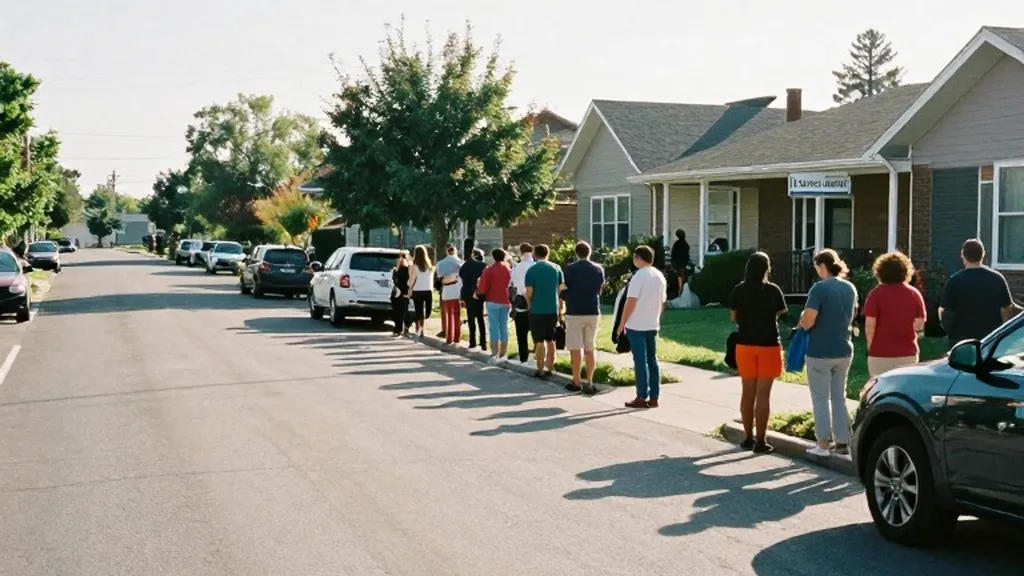
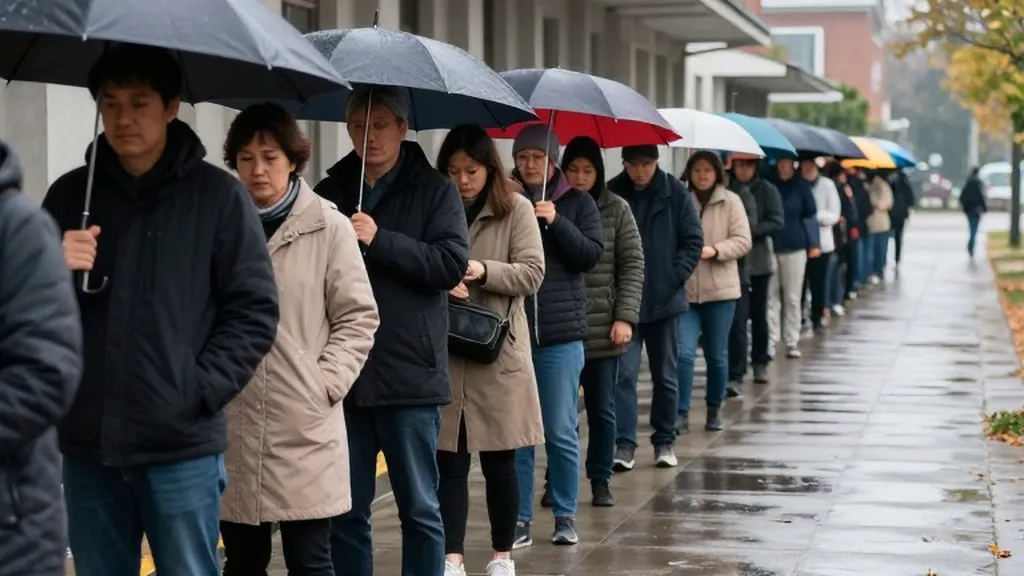
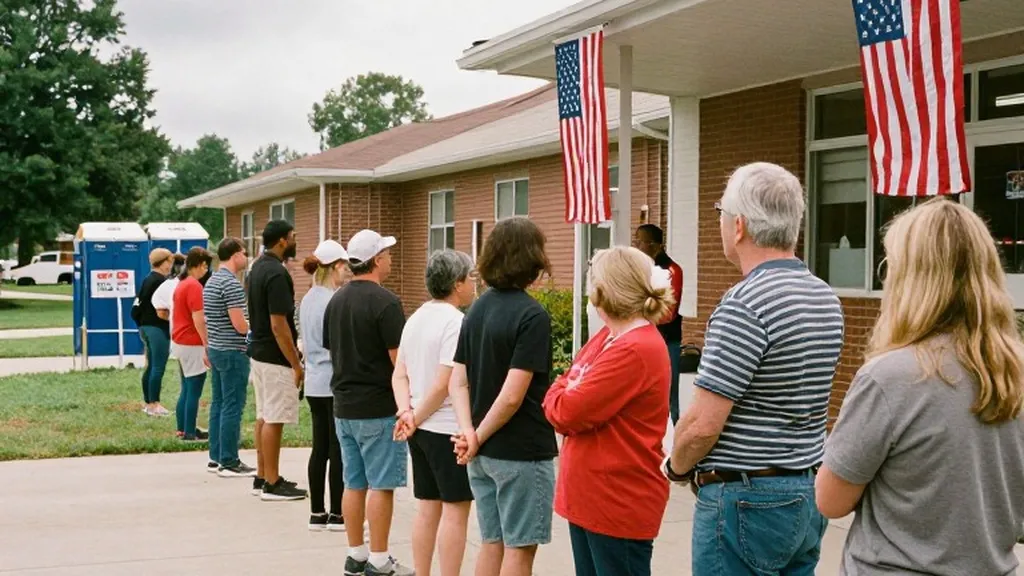
Voters across the United States are casting ballots in the 2026 midterm elections, a decisive contest that will determine which party controls Congress for the final two years of President Donald Trump's second term. More than 57 million people had already voted as of Monday, a figure that surpasses the early vote total from four years ago in many closely watched states. This early surge has shifted the focus of both parties from long-term strategy to the immediate logistics of Election Day.
The Associated Press describes the election as a referendum on the current administration, with voters expressing frustration over high prices and an unpopular war with Iran. Polling data from AP-NORC indicates that 35 percent of U.S. adults approve of President Trump's job performance, while only 25 percent approve of his handling of the economy. Approximately seven in ten adults say the country is heading in the wrong direction, with most blaming the president for the rising cost of living. These sentiments have fueled a cautious optimism among Democrats who are looking to gain control of at least one chamber of Congress.
The stakes for the U.S. House of Representatives are particularly high, as all 435 seats are up for election. Republicans currently hold 218 seats, while Democrats hold 214. Democrats need a net gain of three districts to secure a majority, a threshold that places pressure on their ground game in battleground areas. Ballotpedia counts 46 battleground districts, with 25 held by Democrats and 21 by Republicans. The party in power often faces challenges in midterm cycles, and Republicans are bracing for the possibility of losing the House while fighting to hold onto the Senate.
In the U.S. Senate, 35 seats are at stake, including 33 regular elections and two special elections. Democrats need a net gain of four seats to achieve a majority, a task complicated by the fact that Republicans can lose only two seats to maintain their current hold. Several states, including Maine, Iowa, and Michigan, are rated as toss-ups or leans by major political observers. The AP notes that economic strain and tariffs have made states like Maine competitive, where Senator Susan Collins faces a challenge from Democratic former state Senate President Troy Jackson. These races are seen as potential tipping points for the balance of power in the upper chamber.
The ground game has become the central focus for both parties as they navigate the high volume of early votes. RNC Chairman Joe Gruters emphasized the reliance on voter participation, stating, "Everything depends on turnout. If we turn out our voters, we win, and that's what we've been planning for." His comments reflect a strategy that prioritizes mobilizing the base on Election Day to counter the early vote advantage. This approach is critical in states where the margin of victory is expected to be razor-thin.
Conversely, DCCC Chair Rep. Suzan DelBene framed the Democratic effort around the anger of the electorate. She stated, "The American people are angry. They want change." This messaging aligns with the concerns of voters like James Moore, a 57-year-old librarian in Raleigh, North Carolina, who noted that he is paying more for taxes, healthcare, and general goods. DelBene's remarks suggest that the Democratic ground game is focused on energizing voters who feel the burden of the current economic conditions, particularly in districts that voted for President Trump in 2024.
The financial dynamics of the election also play a significant role in the ground game. The 2026 elections are expected to be the most expensive in history, with Republican committees outraising and outspending their Democratic counterparts. This advantage is largely driven by support from Trump-affiliated groups and Elon Musk. However, at the candidate level, Democrats have managed to outraise their opponents. This disparity in funding has led to a concentrated spending strategy by Republicans, with 88.1 percent of their general election TV ad spending directed at states and districts that President Trump won in 2024.
The administration's involvement in election administration has added another layer of complexity to the ground game. A federal judge temporarily barred the Trump administration from carrying out a plan to prevent noncitizen voting, a move that critics argue risks disenfranchising eligible voters. Additionally, a judge ordered the administration to stop demanding that California election officials segregate ballots cast by people on lists of suspected noncitizens. These legal developments have prompted Democrats to focus on protecting the integrity of the vote while also ensuring that their voters make it to the polls on time.
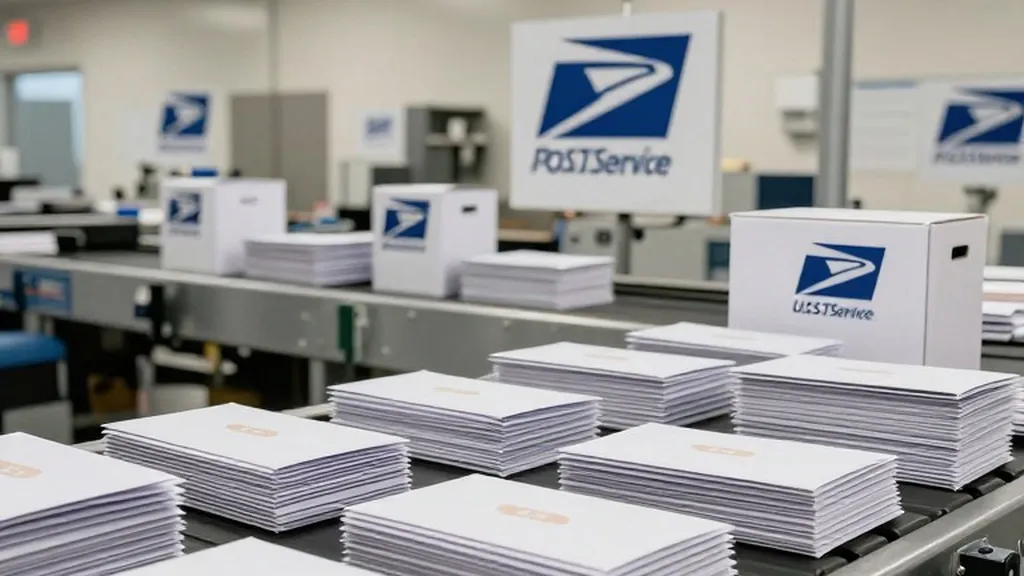
The U.S. Postal Service has added hours, staff, and special lines to ensure that mail ballots are counted on time, addressing concerns about potential delays. This logistical support is crucial for states like California and Colorado, where a large portion of the vote is cast by mail. The efficiency of the mail ballot process will be closely watched by both parties as they seek to validate their respective turnout numbers. The goal for both the Democratic and Republican ground teams is to ensure that every eligible vote is counted and that the final tally reflects the will of the electorate.
As polls open across the country, the focus remains on the execution of the ground game in key battlegrounds. The outcome of these races will not only determine the composition of Congress but also set the stage for future political contests. With the potential for investigations and oversight if Democrats win a chamber, the importance of getting voters to the polls cannot be overstated. The day's events will provide a clear picture of which party has successfully mobilized its base in a highly competitive and expensive election cycle.