Kremlin Clears the Way for First Three-Way Ukraine Peace Talks Since February
Moscow has agreed to restart technical negotiations with Washington and Kyiv, a move that could break the diplomatic deadlock after four and a half years of conflict.
By Yasmin Farouk ·
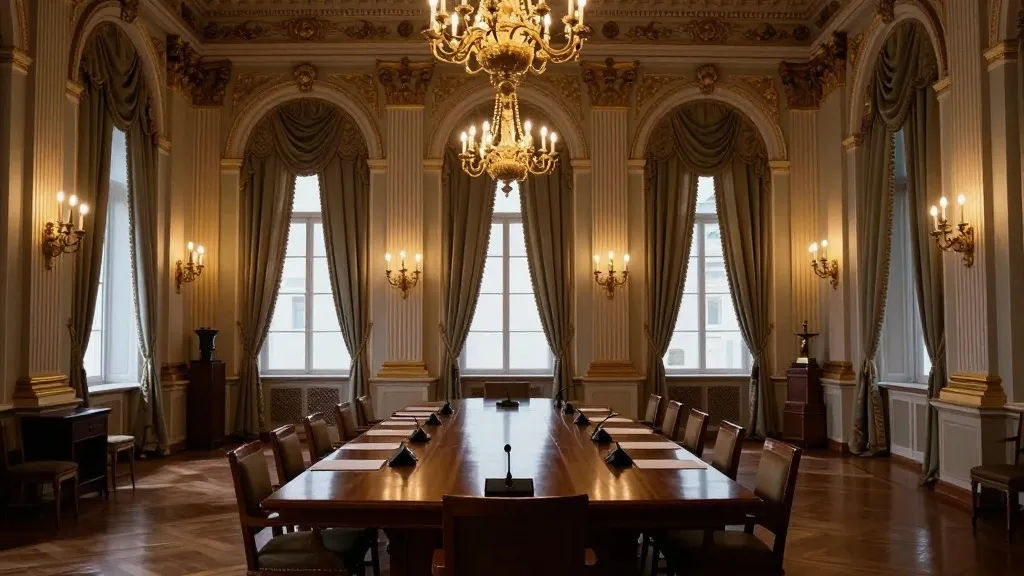
Four and a half years into the war in Ukraine, a significant diplomatic shift has occurred as Russia agreed to resume three-way negotiations with the United States and Kyiv. The Kremlin announced on Wednesday that Russian President Vladimir Putin approved the restart of these talks in principle, potentially setting the stage for the first such trilateral discussions since February. This development follows a three-hour meeting in St. Petersburg between Putin and U.S. envoy Steve Witkoff, signaling a renewed effort to find a path toward ending the conflict that has dominated global politics for years.
The decision to restart talks comes after a period of stalled progress and mixed signals from Moscow. Yuri Ushakov, Putin’s foreign affairs adviser, confirmed the agreement to reporters following the meeting at the Constantine Palace. He stated that the upcoming discussions will focus on building a security system for both Russia and Ukraine once the conflict concludes. While the Kremlin initially criticized recent proposals from Oslo as containing little real value, Ushakov later clarified that while Moscow is not fully satisfied, the current trajectory represents a step in the right direction.
The backdrop for these negotiations is a push by U.S. President Donald Trump to force a deal that stops the fighting. Witkoff’s recent engagements with both Putin and Ukrainian President Volodymyr Zelenskyy reflect this urgency. Zelenskyy expressed support for the swift restart of talks, noting in an audio message that the agenda is clear: to end the war and prepare for a leaders-level meeting. However, the Ukrainian president remained cautious, recalling that Russia had previously canceled similar formats before, and expressed hope that this time would yield different results.
The timing of the announcement was starkly contrasted by the ongoing violence on the ground. Shortly after Zelenskyy’s message was released, missile alerts sounded over Kyiv, accompanied by loud explosions in the capital. Overnight Russian strikes left three people dead and 12 wounded in Kyiv, while damaging ten residential buildings. In the east, two more people were killed and 11 injured near Kharkiv. These attacks underscore the high stakes of the diplomatic efforts, as both sides continue to fight while attempting to negotiate.
U.S. officials indicate that Witkoff and Jared Kushner, Trump’s son-in-law who joined the St. Petersburg meeting via video, proposed the technical-level three-way meeting. They also discussed a postwar economic plan and European security arrangements. A U.S. official familiar with the private discussions noted that the team shared progress from their day earlier meeting with Zelenskyy in Oslo. This coordination suggests a concerted effort by the Trump administration to inject new momentum into peace efforts that have made little significant progress since early last year.
Economic cooperation emerged as a secondary but notable theme in the St. Petersburg talks. Putin stated he was ready to consider restoring U.S.-Russia economic ties and discussed the potential for large-scale joint projects that are nearing the implementation stage. Ushakov emphasized that these projects offer significant prospects for cooperation. Additionally, Putin indicated willingness to discuss the U.S.-led conflict with Iran, suggesting Moscow might use its relationship with Tehran to help bring peace to the region.
The diplomatic activity extended beyond the U.S.-Russia talks. Putin met with Chinese Premier Li Qiang, who was in St. Petersburg for broader consultations. The two leaders discussed a possible economic summit in China next month, where Russian, Chinese, and U.S. leaders may gather. This trilateral economic forum is already being prepared by Beijing, highlighting the complex web of international interests tied to the outcome of the Ukraine war.
Back in Oslo, Witkoff met with Norwegian Prime Minister Jonas Gahr Støre for a brief consultation before flying back to the U.S. Støre suggested that the region may have entered a new phase where Russia is actively seeking diplomatic opportunities. He predicted the new talks would likely occur in mid-November. When asked about the potential for Ukraine accepting the current front line as a border, Støre noted that while Ukraine might not formally accept it as a permanent border, living with that reality is a different matter.
At the White House, President Trump maintained pressure on Kyiv, telling reporters that he wants Zelenskyy to make a deal. Trump expressed frustration with the lack of tangible returns for U.S. support, stating that if a deal is not reached, it could lead to a very bad outcome. Meanwhile, Zelenskyy noted that Kyiv is once again receiving early warnings about incoming missiles, a sign of renewed coordination with allies after recent strikes that occurred with less notice. The release of retired American teacher Stephen Hubbard by Russia was also viewed as a goodwill gesture, further indicating a shift in tone from the Kremlin.
The next few weeks will be critical as technical teams from Washington, Moscow, and Kyiv prepare for the mid-November meetings. Success will depend on whether the security frameworks discussed can bridge the longstanding demands of both sides. For now, the diplomatic machinery is turning again, offering a glimmer of hope that the war might finally be moving toward a negotiated end, though the daily reality of the conflict continues to test the durability of these new overtures.
Source: Atlanta News First