Cassatt's 60-Foot World's Fair Mural Vanished After 1912
The Art Institute of Chicago displays a new exhibition tracing the history of a massive impressionist work that was stored in a Lake Shore Drive mansion before disappearing from record.
By Marco Graham ·
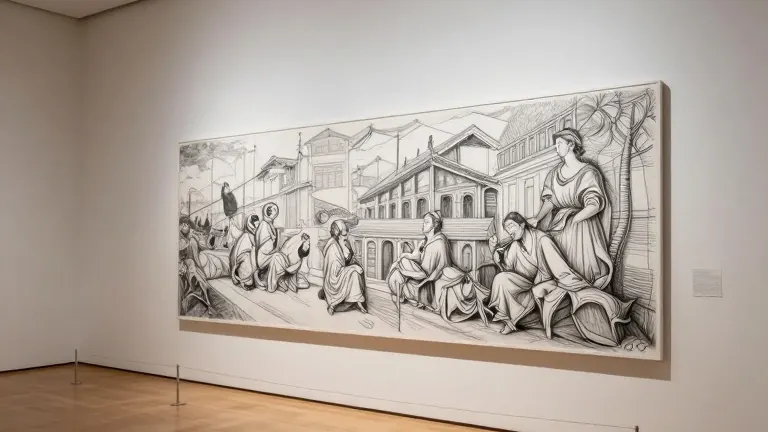
A three-panel mural by Mary Cassatt vanished from a Chicago storage facility more than a century ago.
The Art Institute of Chicago is currently presenting an exhibition centered on that missing piece. The show examines the creation of the work for the 1893 World's Columbian Exposition and the subsequent mystery of its disappearance. Curator Annelise Madsen stated that the last confirmed location for the artwork was in the city in 1912. Since that year, the documentation trail has ended.
Cassatt, an American artist residing in Paris, received a commission to paint the piece titled Modern Woman. The mural was intended for the Woman's Building, a structure designed and funded by Chicago philanthropist Bertha Palmer. The building served as a showcase for female contributions to American culture, featuring exhibits on women's patents, literature, and labor. Wanda Corn, a professor emeritus at Stanford University, noted that the structure was a major feature of the fair. It displayed evidence of women's roles as innovators, authors, and workers.
The physical scale of the commission was substantial. Cassatt's work measured 60 feet in length and 14 feet in height. It depicted well-dressed women pursuing fame, performing music, and tending an orchard. The central scene showed women harvesting the fruits of knowledge and science. This massive canvas was displayed in the main hall alongside a mirrored piece by Mary MacMonnies titled Primitive Woman. These commissions represented a rare opportunity for female artists to execute large-scale public works during that era.
Following the conclusion of the fair, the Woman's Building was dismantled. The murals were placed in storage. Madsen identified the Palmer family's Gold Coast mansion on Lake Shore Drive as the final known resting place. The residence was once the largest private home in the city before its demolition in 1950. In 1912, the director of the Art Institute wrote to inquire about unrolling the mural for a temporary display. Madsen confirmed that this letter exists in the museum's archives. The correspondence ended without a resolution, and the installation never took place.
Speculation suggests the artwork may have suffered water damage or been destroyed in a fire. Corn assessed the likelihood of the piece resurfacing as low. She noted that many researchers have investigated the case and largely concluded that the mural is gone. The work helped establish Cassatt's reputation in the United States and opened the door for other women to pursue large-scale commissions. The exhibition aims to reconstruct the history of the project and present the narrative to visitors.