Breaking: VIX Spikes to 28 as Hedge Fund Liquidation Triggers Tech Rout
The Cboe Volatility Index hit its highest level since March amid a reported fund liquidation, while the Nasdaq fell into correction territory.
By Larissa Shah ·
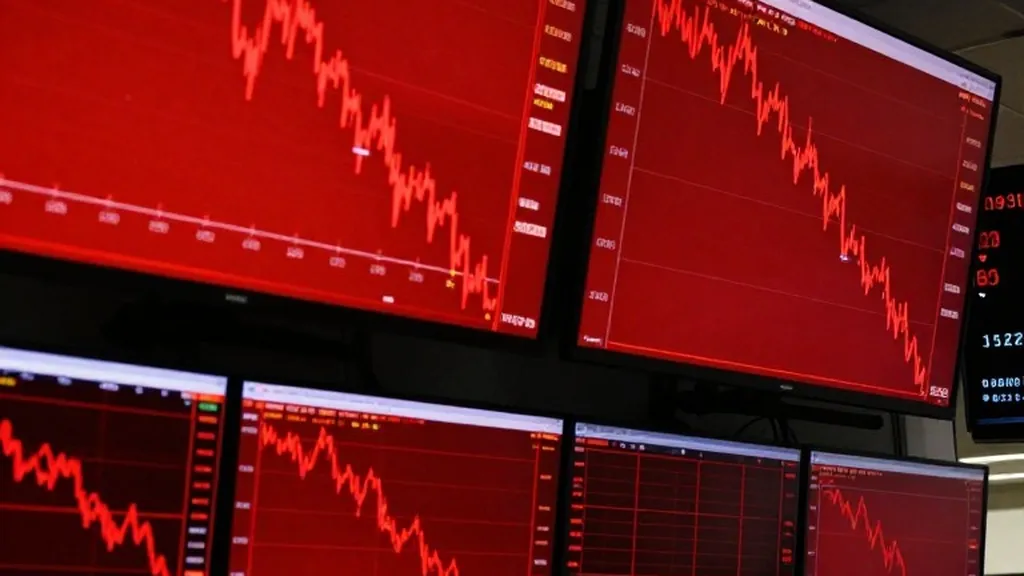
The Cboe Volatility Index, known as Wall Street's fear gauge, surged above 28 on Thursday, marking its highest reading since the Iran war tensions in March. This spike in volatility coincided with a sharp decline in major equity indices, signaling a sudden shift in investor sentiment. The VIX jumped as much as 5.7 points to above 28 about 90 minutes after the opening bell. The VIX was up 61 percent on the day. From its low to its high, the VIX moved more than 11 points, which is its biggest one-day move since April 9.
The surge in volatility was accompanied by an intense frenzy in the options market. By midday, nearly 800,000 VIX call options had traded, a volume that was 3.5 times the 30-day average. This activity reflects a rush by traders to hedge against further downside or to speculate on continued turmoil. The options market often moves ahead of the cash market, and the heavy volume in VIX calls suggests that many participants were bracing for a significant drop in stock prices.
Noel Smith, an options trader, described the market action as a liquidation. He stated that his data suggested de-risking, but his gut indicated a blowout that could create a dip-buying opportunity. Smith noted that oil and interest rates were relatively unchanged. He added that the tape looked like a liquidation and that this assessment was supported by what he was hearing regarding a hedge fund. This talk of a hedge fund liquidation and a momentum unwind became a central theme in the day's trading.
As equities sold off, investors fled into the safety of government debt. The 10-year Treasury yield fell to 4.83 percent, its lowest level since September. This decline occurred as investors bought bonds as a haven from the stock market's volatility. The flight into Treasuries provided a counterbalance to the equity rout, with bond prices rising as yields dropped. This safe-haven move is typical during periods of heightened uncertainty and fear selling.
The stock market damage was severe, with the Dow Jones Industrial Average falling more than 1,800 points, a drop of 3.4 percent, to 51,868. The S&P 500 fell 4.3 percent, its worst day since April 2025. The Nasdaq Composite fell 5.5 percent, its worst day in 18 months, and closed more than 11 percent below its record set last month. This puts the index in correction territory, defined as a fall of at least 10 percent from a recent high. An estimated $2.5 trillion in market value was wiped from the Nasdaq Composite.
The selling was driven by fears that the AI bubble could burst, concerns that predated the election. Democrats campaigned on slowing the spread of data centers and AI, and voters rejected data centers in a series of local ballots. In Texas, Democrat Gina Hinojosa won the race for governor after campaigning on an immediate moratorium on new data center construction. These victories heightened concerns that the facilities at the heart of the AI build-out will face new hurdles. Investors are weighing whether tighter state-level restrictions could slow data center construction, pressuring companies tied to the artificial intelligence trade.
Neil Wilson, investor strategist at Saxo UK, said a complete capitulation-level event was playing out in tech stocks. He noted that the fear is a total momentum unwind as Democrats pace the frontier and kibosh datacenter buildout. Wilson added that this looks totally overdone but the nature of sell everything in this market means we need to look for some stability first. The sentiment reflects a deep anxiety among strategists about the sustainability of the recent tech rally.
Susannah Streeter, chief investment strategist at Wealth Club, said fresh panic over the AI trade has hit Wall Street hard. She noted that fears that the vast sums poured into AI infrastructure may not deliver the returns investors have been banking on are now colliding with the prospect of a sharp slowdown in data centre construction. This view aligns with the broader narrative that the market is reassessing the value of AI-related assets in light of political and regulatory headwinds.
The day's selling reversed Wednesday's rally, when Wall Street had its biggest daily gain in months. On Wednesday, the VanEck Semiconductor ETF had already fallen 3 percent while the VIX fell more than 4 points, the first time in market history the two moved that way together. This unusual divergence had foreshadowed the volatility that erupted on Thursday. The market's reaction to the election results and the subsequent data center backlash has created a complex trading environment for investors.
The Philadelphia Semiconductor Index fell more than 12 percent, its worst day since the Covid-19 breakout in March 2020. Nvidia fell 9.2 percent, the biggest faller in the Dow, losing more than $400 billion in market value. The Magnificent Seven technology companies shed about $1 trillion in value in the single trading day. These figures underscore the breadth of the sell-off, which extended beyond just a few large-cap names to include a wide range of technology and semiconductor stocks.
More Business · Bad Service · Report a business · Got a Story?