US Drafts Orbán for UN Chief to Secure P5 Votes
Washington is pitching the former Hungarian leader as a candidate who can unite Russia and China behind a single Security Council nominee.
By Larissa Shah ·
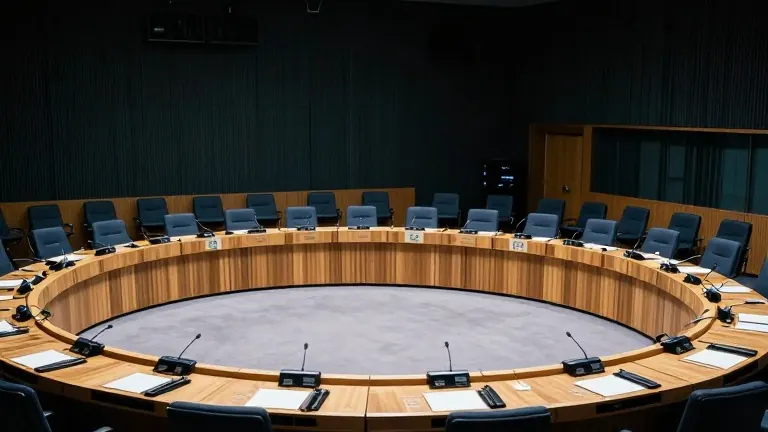
The White House is positioning former Hungarian Prime Minister Viktor Orbán as the next United Nations Secretary-General, a move designed to lock in the votes of Moscow and Beijing. According to The Wall Street Journal, US officials did not merely support Orbán’s interest in the role; they originated the proposal. The administration believes this joint candidacy will satisfy the veto-wielding powers while delivering a leader who aligns with conservative priorities in Washington.
A State Department official described the plan as initially counterintuitive but strategically sound. The logic rests on historical precedent: when the United States, Russia, and China coordinate on a Security Council candidate, they typically secure the position. The goal is to present Orbán as a shared nominee that prevents the fragmentation often seen in these races.
US representatives have tallied eight affirmative votes from Security Council members, a number they describe as sufficient for a comfortable passage. They estimate that ten additional votes out of the fifteen total members could potentially be secured if the three major powers back the bid. One American official characterized Orbán as the ideal candidate for the administration's conservative base, citing his track record of opposing mass migration, liberal non-governmental organizations, and left-leaning judicial and media institutions.
The pitch to Orbán has been received with cautious optimism. US contacts found the former prime minister positively inclined toward the candidacy, though he attached caveats to his acceptance. The administration is currently holding the formal announcement until after the US midterm elections, at which point President Donald Trump and Vice President JD Vance are expected to publicly endorse the bid. Orbán’s pro-China stance and history of clashing with the European Union have not diminished his appeal to US conservatives, who view him as a defender of Western civilization who benefits from EU subsidies without being constrained by Brussels.
Supporters distinguish Orbán from other potential candidates, describing him as a "general" rather than a "secretary." A representative from a partner nation noted that other contenders have deep experience in international bureaucracy and behind-the-scenes diplomacy, whereas Orbán brings a direct approach to power. A State Department representative agreed, stating that Orbán adheres to the correct ideology and possesses the experience to govern under hostile conditions without being intimidated by the existing establishment.
The selection process occurs against a backdrop of growing calls to reform the UN. Spanish Prime Minister Pedro Sánchez has urged for stronger accountability mechanisms to stop governments from undermining international rules. Turkish President Recep Tayyip Erdoğan and German Foreign Minister Johann Wadephul have both criticized the Security Council’s inability to act due to the veto power, a structural flaw the current US strategy aims to exploit rather than fix.