Selfridge Base Name Honors 1908 Crash Victim, Lt. Thomas Selfridge
The Michigan installation commemorates the first person killed in an airplane crash, a lieutenant who advocated for military aircraft use.
By Amina Kaminski ·
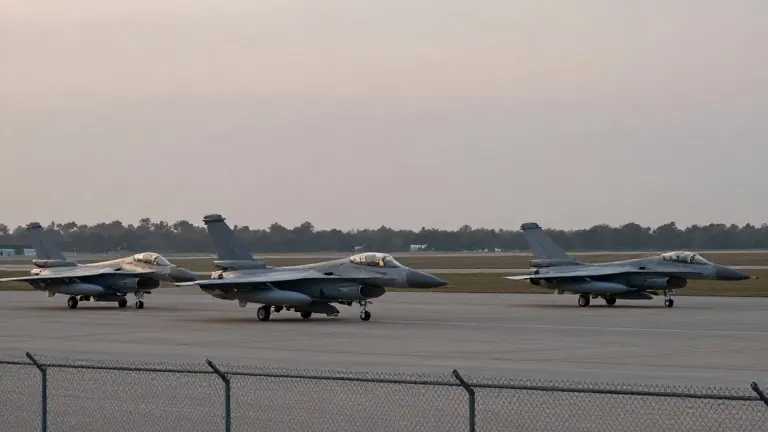
Selfridge Air National Guard Base takes its name from Lt. Thomas Etholen Selfridge, an early advocate for military aircraft who died in 1908 when a Wright Flyer crashed during a test flight. He became the first person recorded to die in an airplane crash.
Selfridge was born in 1882 in San Francisco and graduated from the United States Military Academy in 1903. He pursued an interest in aircraft and arranged a meeting with Orville Wright to examine the possibilities of aircraft in warfare.
On Sept. 17, 1908, Wright took Selfridge up on the Military Flyer, a modified version of the Wright Model A. The aircraft carried more weight than it ever had before. The two circled Fort Myer several times before a mechanical error occurred: the right-hand propeller broke, struck a wire, and caused a loss of control. Wright attempted to glide the craft down safely, but it struck the ground nose-first.
Wright was severely injured and hospitalized for weeks. Selfridge cracked his skull and died within hours. He was 26 years old.
Selfridge was buried at Arlington National Cemetery. His legacy is marked at West Point Cemetery with a memorial, and the gate between Arlington National Cemetery and Joint Base Myer-Henderson Hall is named the Selfridge Gate. Surviving pieces of the Wright Flyer are displayed at the National Museum of the United States Air Force in Ohio.
The base's naming follows a documented path, unlike other Michigan place names whose origins are unclear or inconsistent. Some Michigan counties were named after members of President Andrew Jackson's Cabinet, others use indigenous words, and some are constructed words meant to sound native. Detroit derives from the French phrase for the strait of Lake Erie.