Chicago Parents Turn to Flag Football as CTE Research Rattles Tackle Fans
New studies linking three-quarters of deceased NFL players to chronic traumatic encephalopathy are driving a shift toward non-contact alternatives for youth.
By Larissa Shah ·
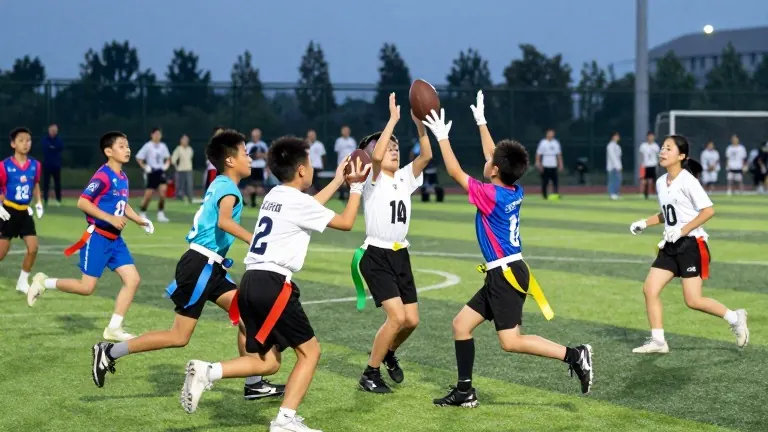
Sandeep Basran, an assistant coach in the Chicago area, keeps his nine-year-old son in a flag football league rather than a tackle program. The boy has played for four seasons and suffered only a minor leg injury during the current year. Basran, who is a neurology researcher by trade, cites the risk of chronic traumatic encephalopathy, or CTE, as the primary reason for the switch.
Basran noted that the brain damage associated with CTE comes from both major impacts and minor, repetitive hits that occur on every play. He explained that these small impacts accumulate over time. This concern has led many parents to reconsider when children should start playing tackle and whether the sport is suitable for younger age groups.
Flag football offers a non-contact alternative with fewer players on the field, less equipment, and a faster pace. Unlike tackle, it does not involve blocking or physical collisions. Basran said his son plays in the i9 Sports flag football league, where he has never sustained a head injury. The parent also pointed out that avoiding tackle injuries helps protect his son's ability to participate in other sports such as basketball, tennis, and golf.
Recent medical data has intensified this shift. A study published in April examined the brains of former NFL players who died between 2016 and 2021. Researchers found that at least one in four players had CTE. In a follow-up study released on Wednesday, the same team estimated that three out of four players who died between 2008 and 2023 likely had the disease. This is the highest prevalence estimate recorded to date.
The researchers used data from the UNITE Brain Bank at Boston University and national death records for 1,966 other deceased former players. They analyzed 396 donated brains to reach their conclusion. An NFL spokesperson said in an emailed statement that the league continuously strives to make the game safer by implementing strategies to reduce concussions and head impacts.
Growth in flag football is not limited to boys. In San Diego, the Football ‘N’ America league has seen rapid expansion in girls' participation. Tim Lewis, a parent and coach, said he has coached boys for five years but is now seeing explosive growth on girls' teams. He noted that flag football is becoming a major competitive sport for high school girls, with events drawing large crowds.
Joe Becker, owner of i9 Sports in Chicago, highlighted that flag is the primary football outlet for girls because they have fewer opportunities to play tackle. Becker said the sport is now an official Illinois high school sport for girls and is set to debut in the Olympics in 2028. This recognition is driving marketing efforts and participation increases.
Data from the Aspen Institute's State of Play report shows flag football was the only team sport tracked by the Sports and Fitness Industry Association to grow among children ages 6 to 17 between 2019 and 2024. Flag participation rose by 14% during that period, while tackle football declined by 7%. By 2024, 4% of kids aged 6 to 12 played flag, compared to 2.7% who played tackle. Tackle remains more popular among older teenagers, with 6.4% of 13- to 17-year-olds participating compared to 2.8% for flag.
Robert Stern, a professor at Boston University and co-founder of the CTE Center, co-authored the recent studies. Stern stated that the human brain is not designed for the repetitive impacts common in football. CTE is a progressive disease characterized by the buildup of an abnormal protein called tau. The condition can only be definitively diagnosed after death, though concussions can have serious short-term effects. There is currently no cure for the disease.