UN peacekeepers leave Western Sahara after Security Council deadlock
The mission, which has monitored the territory since 1991, ends abruptly due to conflicting votes by the United States and Russia.
By Amina Kaminski ·
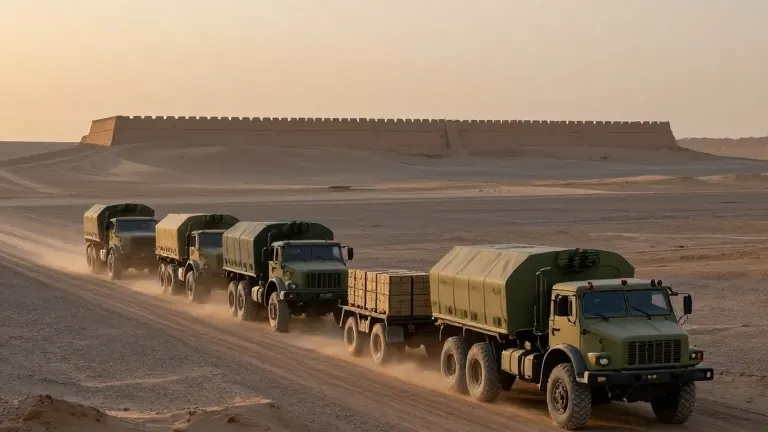
The United Nations concluded its 35 year presence in Western Sahara on Sunday, November 1, 2026. The abrupt end to the mission followed a failed effort by the Security Council to agree on the future of the territory. Morocco now administers nearly the entire region, a vast desert area roughly the size of Colorado located along the northwestern Atlantic coast of Africa.
The withdrawal stems from a stalemate between the United States and Russia at U.N. headquarters. On Friday, Russia vetoed a U.S. draft resolution that would have supported Morocco's claim to sovereignty and planned to end the peacekeeping force next year. Immediately following that veto, a rival Russian proposal to extend the mission was voted down. This sequence of events left the mandate expired, forcing the mission to cease operations rather than continue under a renewed authorization.
Stephane Dujarric, the spokesperson for the U.N. secretary general, announced that the liquidation period began on November 1. A smaller team under the U.N. Department of Operational Support will now manage the process. Their task involves transporting equipment belonging to troop-contributing countries back to their home nations and disposing of remaining U.N. assets in an orderly manner.
The territory has been a source of conflict since Morocco annexed it in 1975. The dispute led to an armed conflict lasting more than 15 years that killed over 16,000 people, according to the French Senate. A U.N. brokered cease fire took effect in 1991, leading to the creation of the U.N. Mission for the Referendum in Western Sahara, known as MINURSO. The original plan included a referendum on self-determination, but the vote never occurred because Morocco and the Polisario Front disagreed on voter eligibility criteria.
Reactions to the end of the mission were sharp. The Moroccan royal palace welcomed the decision, describing the mission as a tool to internationalize the dispute. The Polisario Front, which operates from refugee camps in Tindouf, Algeria, labeled the decision unacceptable. The Algerian foreign ministry expressed profound regret and criticized the excessive bias it saw in the U.S. draft resolution. Algeria has long backed the Polisario Front, which seeks to establish an independent Sahrawi Republic for the Indigenous Sahrawi people.
The mission ended with a budget of more than $62 million for the 2026-2027 period. It was authorized to have 534 personnel, with Egypt, Ghana, and Pakistan serving as the top military contributors. During its three decades of operation, 20 MINURSO personnel lost their lives. The U.N. had noted last month that tensions and low-intensity hostilities have continued in the territory since the Polisario withdrew from the cease fire in 2020.
The U.N. secretary general called on all parties to respect the rights of the people of Western Sahara and to exercise maximum restraint. He expressed concern about the security situation and the risk of hostilities escalating. The end of the mission occurs at a time when diplomatic relations between Morocco and Algeria remain severed, a state that began in 2021. Both nations view the territory as a key strategic issue, with Morocco securing support from capitals including Washington, Paris, and London, while the Polisario Front relies on backing from Algeria, Russia, and South Africa.