Youth protests in Germany turn violent as rioters loot Frankfurt stores
Thousands marched across 30 cities on Saturday before masked groups clashed with police in major urban centers.
By Larissa Shah ·
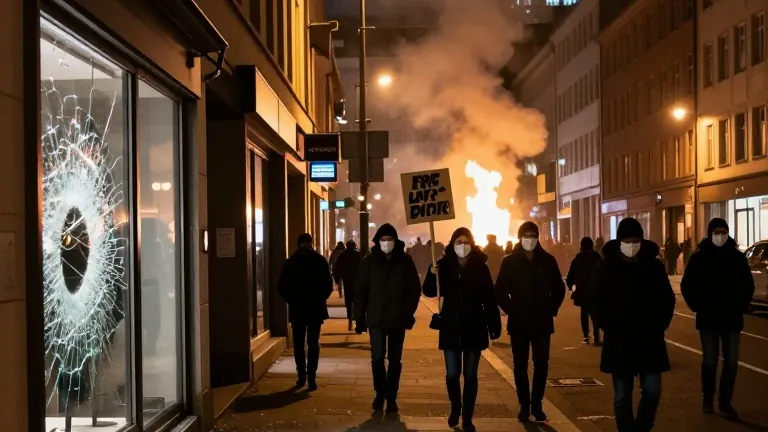
Germany hosted a nationwide series of demonstrations on Saturday driven by young people concerned about the rising cost of living. While the day began with organized marches in more than 30 cities, the mood shifted as evening fell and crowds in several major cities failed to disperse.
The rallies were coordinated by a youth initiative known as "Gen Z regelt," a name that translates to "Gen Z's got this." Participants gathered to advocate for improvements in education, public health, and climate protection while opposing the return of military conscription. Organizers reported that tens of thousands took part in the events across the country, although official headcounts were not yet available.
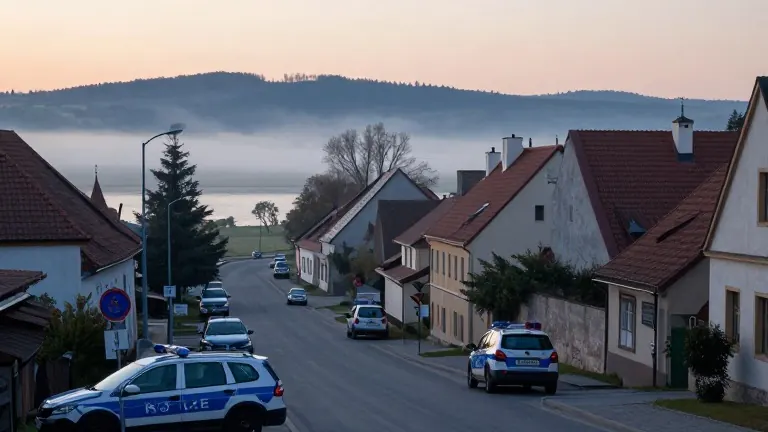
Violence broke out in Frankfurt, Berlin, Cologne, and Hamburg as tensions escalated. In Frankfurt's financial district, police reported that masked protesters threw stones, fireworks, and pepper bombs at officers. Looters also entered a gun store and stole weapons, which authorities later recovered. Frankfurt police noted on the social media platform X that some rioters threw Molotov cocktails after striking officers with stones and bottles.
Similar scenes unfolded in Hamburg, where protesters shot pyrotechnics at police and set fire to barricades. Law enforcement in the northern city used water cannons and tear gas to clear the crowds. These clashes marked a sharp contrast to the earlier hours of the day, when demonstrations remained largely peaceful.
In Berlin, young protesters assembled at the Brandenburg Gate in the afternoon. They demanded increased government investment in housing and social services. Lara Breitenbach, a high school student, explained that the next generation would bear the long-term consequences of current policy choices. She said, "We call for more money to be invested in social services and education, as well as in climate protection.. because we are the ones who will be affected by this the longest and who will have to live with it."
Janelle Schulz, another student from Berlin, pointed to specific infrastructure failures in her school to illustrate the need for funding. She described a ceiling collapsing due to water damage, a shortage of teachers, and broken toilets. "Nothing is being done about it," she said.