Supreme Court will test if federal law still bans home distilling
A 158-year-old ban on private alcohol production faces a constitutional challenge that could redefine the limits of federal tax power.
By Amina Kaminski ·
The Supreme Court has agreed to hear a case that will determine whether Americans can be imprisoned for distilling alcohol in their own homes. The dispute centers on a federal statute dating to 1868, which prohibits maintaining a distilled spirits plant in any dwelling place. Violators face a maximum fine of $10,000 and up to five years in prison.
The case began with Scott McNutt, a member of the Hobby Distillers Association. In 2014, the Treasury Department sent McNutt a notice warning of potential civil and criminal liability. The agency stated it had reason to believe he had purchased equipment capable of producing alcohol. The notice explicitly stated that federal law provides no exemptions for personal or family use. It also erroneously claimed the offense carried a fine of up to $500,000, a figure that contradicted the statutory maximum of $10,000.
McNutt and another plaintiff, Thomas Cowdrey, challenged the ban in federal court. Cowdrey, who has developed a recipe for apple pie vodka, seeks to experiment with beverage spirits. His lawyers argue that both men own stills used lawfully for fuel alcohol and wish to tinker with beverage production. The plaintiffs contend that the government is effectively criminalizing a hobby that is permitted for other alcoholic beverages.
The U.S. Court of Appeals for the 5th Circuit sided with the distillers in April. Judge Edith Jones wrote the opinion, ruling that the ban cannot be justified as an exercise of the federal government’s tax power. She described the provision as an anti-revenue measure that prevents distilled spirits from coming into existence. In her view, the law’s effect is to reduce revenue rather than raise it.
Jones noted that the Supreme Court explained in 2012 that taxation leaves individuals with a lawful choice to act, provided they pay the tax. Under the current ban, however, home distillers have only the choice to refrain from the activity or risk fines and imprisonment. She rejected the government’s argument that the ban helps collect liquor taxes by prohibiting hard-to-detect production. Jones warned that if Congress could prohibit intrastate activity solely because it might produce products that are difficult to tax, there would be no limit to its power.
The judge extended the government’s logic to other scenarios. She observed that Congress could criminalize nearly any at-home conduct if it has the possibility of concealing taxable activity. Under that standard, she wrote, home-based businesses might be forbidden and remote work could be deemed a crime.
The Trump administration is asking the Supreme Court to overturn the 5th Circuit’s decision. The government argues that threatening imprisonment for home distillers is a necessary and proper safeguard against tax evasion. It maintains that prohibiting this form of production helps ensure compliance with liquor taxes.
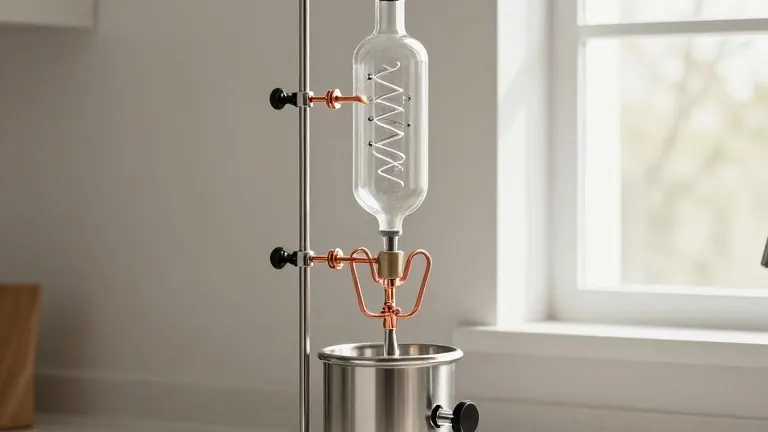
The inconsistency in federal policy is evident in how other beverages are treated. Federal law has long permitted the production of wine and beer for personal or family use. Online retailers, including Amazon, sell a wide variety of home stills. Many of these appliances are explicitly advertised as devices for producing vodka, gin, brandy, and whiskey. This commercial availability suggests a common perception that the activity is legal, a view that federal criminal law currently contradicts.
The Supreme Court will hear arguments on the specific constitutional issue of whether the ban is a valid exercise of tax power. The decision will determine the legal status of thousands of hobbyists who currently risk federal prosecution for a private practice that has been tolerated for decades in other forms of alcohol production.