Iran Threatens US Warships In Gulf
Tehran's military leadership warns American naval vessels are vulnerable as the White House debates its next strategic move.
By Amina Kaminski ·
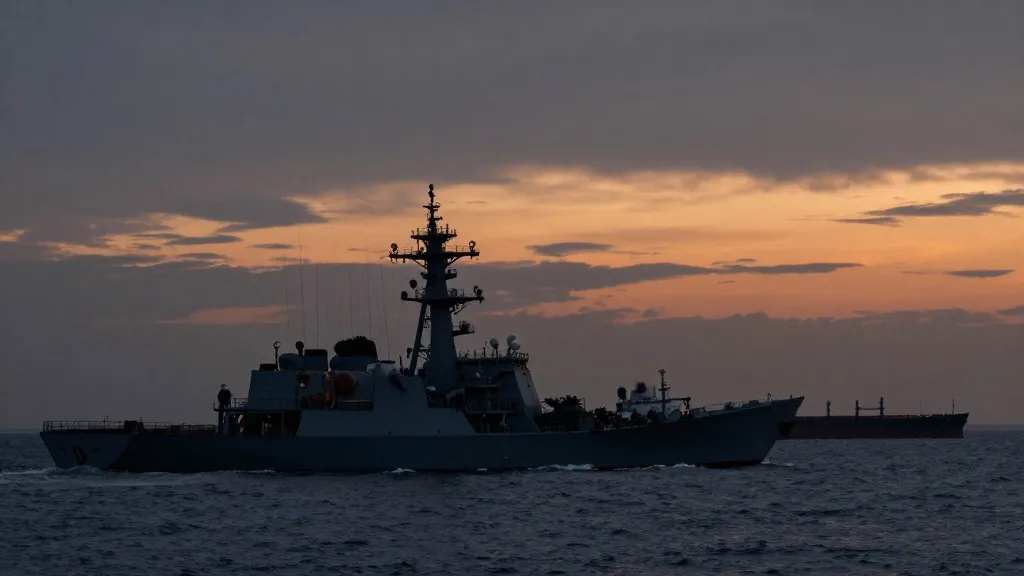
Ali Abdollahi, the chief of general staff for Iran's armed forces, issued a stark warning on Saturday that the United States Navy is no longer safe in the Persian Gulf. This statement came as President Donald Trump suggested that Washington has not yet decided on its next major military action against Tehran. The tension marks a significant escalation in rhetoric and positioning in the ongoing conflict.
The core of the new threat is simple: Iran says it is prepared to fire directly at American warships. Abdollahi stated that the US Navy cannot re-enter Iranian territorial waters or the surrounding areas without facing fire. He added that any vessel in the region is now a potential target. This represents a shift from previous defensive postures to a more assertive naval stance.
President Trump addressed supporters at a rally in Florida on Friday. He indicated that the US military might launch another massive bombing campaign similar to the initial "Epic Fury" strikes. The President is weighing two main options: ending the fighting quickly with heavy airstrikes or continuing the current pressure through a naval blockade and sanctions. His comments suggest that the decision remains open and that significant force is still on the table.
Abdollahi criticized the apparent contradiction in American strategy. He argued that if the US believes Iran's military power has been largely destroyed, it should move its aircraft carriers closer to Iranian territory. Instead, the carriers remain at a distance. He claimed that Iranian forces intend to keep the US and Israel in a strategic quagmire as a response to the surprise attack that started the war on February 28.
The economic impact of the conflict is becoming more pronounced. Brent crude oil prices have risen to approximately $117 per barrel, which is the highest level since April. Shipping lanes through the Strait of Hormuz remain under active threat. The Islamic Revolutionary Guard Corps reported that seven tankers were attacked or hit mines during the night into Thursday. On Friday, the group claimed that two supertankers also struck mines. This pattern of attacks is disrupting global energy flows.
The conflict has expanded to other fronts in the region. The Iran-allied Houthis in Yemen launched another strike on Riyadh on Saturday. This followed recent attacks on Dammam's international airport and the Shaybah oilfield. In response, Saudi forces have bombed areas held by the Houthis, including Marib and Taiz. Meanwhile, in southern Lebanon, reported Israeli air strikes hit areas near Nabatieh, and artillery fell near Zawtar ash-Sharqiyah.
In the occupied West Bank, Israeli Prime Minister Benjamin Netanyahu ordered a lockdown after a Palestinian attack killed two soldiers in Hebron. Netanyahu faces a domestic election on October 27, which adds political weight to his decisions in the conflict. The lockdown is intended to secure the area but also signals a tightening of control in the region.
Diplomatic efforts to resolve the crisis have stalled. Senior diplomats from Turkiye, Saudi Arabia, Pakistan, and Egypt met with counterparts from the UK, France, Germany, and Italy in Istanbul on Friday. Neither the US nor Iran was present at the talks. Turkiye's Foreign Minister Hakan Fidan warned that a new attack on Iran would widen the war and spread the conflict across the region. He noted that no one is currently endorsing such an action.
The regional ministers blamed the Houthis and Iran for instability, while also stating that Israeli occupation is a main source of the problem. They backed the June Islamabad memorandum and demanded unrestricted passage through Hormuz. Iranian state-linked media argued that the meeting showed a gap between diplomatic claims and field realities. Analysts suggest that Tehran is activating a "dead hand" doctrine to continue attacks even if senior leaders are targeted again.