Tehran faults Washington for broken accord as war shadows return
Iranian leadership assigns blame to the United States for the collapse of a ceasefire framework, warning of significant retaliation if hostilities restart before the weekend.
By Lauren Collins ·

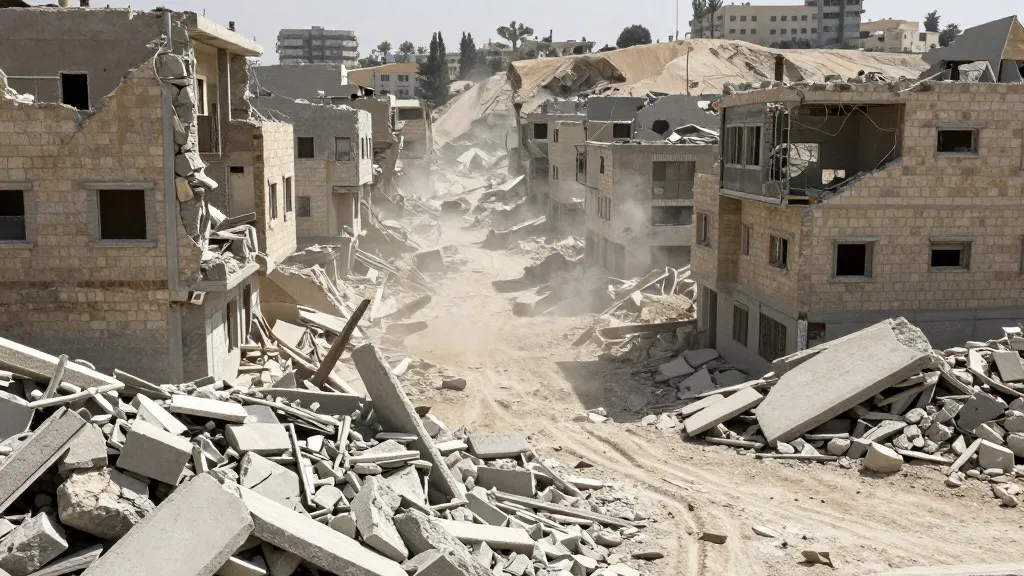
Tension between Tehran and Washington has reached a critical juncture, with the Iranian president accusing the United States of dismantling a tentative agreement designed to end the ongoing conflict with the U.S. and Israel. While President Masoud Pezeshkian expressed a desire to return to the negotiating table and finalize the arrangement, his remarks occurred against a backdrop of intensifying anxiety that military operations could resume within days. The fragility of the peace process was highlighted on Friday when President Donald Trump referenced the possibility of launching another "Epic Fury" operation, a codename associated with the war that commenced on February 28.
The path to this standoff began with the initial outbreak of violence in late February, which led to the establishment of an interim deal intended to stabilize the region. Over the following months, diplomatic efforts were pursued alongside military engagements. However, recent signals from both capitals suggest that the temporary truce is fraying. This week, Israeli Prime Minister Benjamin Netanyahu reaffirmed his commitment to toppling the Iranian government, while Trump indicated readiness for further military action. These statements have coincided with significant domestic political pressures, including Israeli elections scheduled for Tuesday and crucial U.S. midterm elections on November 3, where Democrats could potentially seize control of both legislative chambers.
Iranian military officials have responded with sharp warnings regarding the potential for renewed conflict. The Islamic Revolutionary Guard Corps indicated that even limited strikes would provoke a reaction several times more powerful. Ali Abdollahi, the chief of staff for the Iranian Armed Forces, stated on Saturday that U.S. forces would not be permitted in the Gulf under any circumstances. He dismissed the idea of American naval presence as a dream that Trump would take to the grave. These assertions underscore the high stakes involved in any future engagement in the region.
Government spokesperson Fatemeh Mohajerani reinforced the nation’s stance in a memo issued on Saturday. She emphasized that Iran does not require permission to defend itself and that while the country seeks peace, it will respond to aggression with severe consequences. Mohajerani noted that Tehran does not avoid dialogue but remains prepared to protect its sovereignty, challenging those who believe they can destroy Iran to reassess their strategies. This message aims to balance diplomatic openness with a firm display of military resolve.
Behind the scenes, senior figures in the Iranian government are coordinating their approach to the crisis. Judiciary chief Gholamhossein Mohseni Ejei met with Supreme Leader Mojtaba Khamenei to discuss corruption and compensation for citizens affected by the war. Khamenei, who assumed the role after his father’s assassination during the opening strikes of the war, has remained largely out of public view since early March. Parliament Speaker Mohammad Bagher Ghalibaf, who serves as the chief negotiator, was also reported to have met with the Supreme Leader earlier in the week, signaling a unified front in Tehran’s leadership.
As the weekend approaches, attention turns to whether the threats of renewed strikes will materialize. The interplay between military posturing and diplomatic overtures will determine the immediate trajectory of the conflict. For working families and observers alike, the clarity of the next steps remains elusive, leaving the region in a state of precarious balance.
Source: Al Jazeera