Hebron residents displaced as troops flatten district ahead of national vote
Military forces in the West Bank city have destroyed a large residential area, displacing roughly 1,500 people days before Israelis go to the polls.
By Amina Kaminski ·
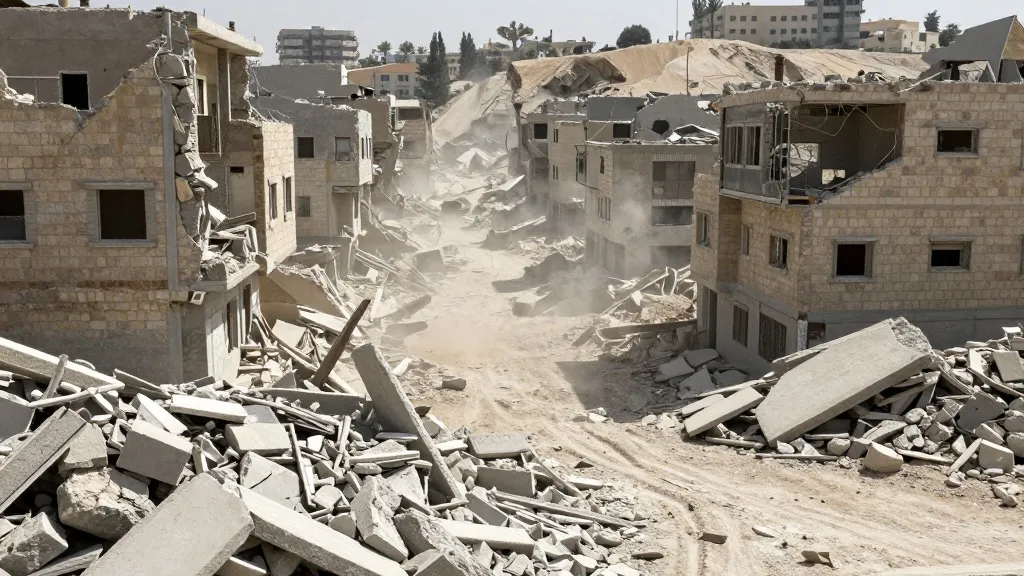
Palestinian residents of Hebron faced a sudden and severe displacement this week when Israeli military forces leveled a significant portion of the city’s Ein Deir Baha district. Local officials describe the action as a retaliatory measure following a deadly attack on a nearby checkpoint, with the operation resulting in the forced exit of approximately 1,500 individuals from their homes by Saturday afternoon.
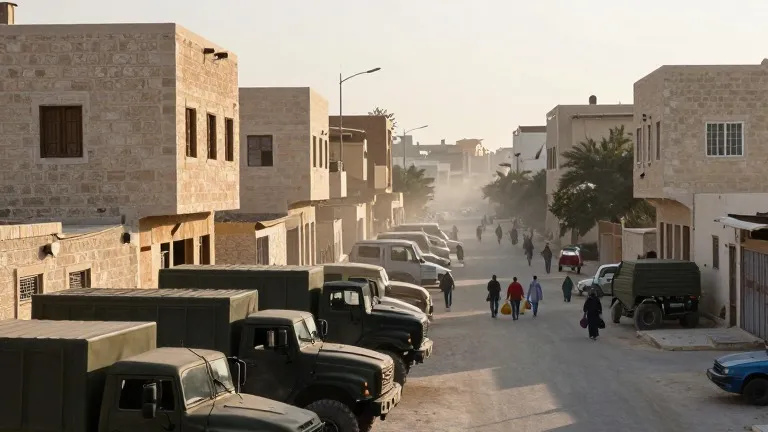
The physical impact on the area has been extensive. The Hebron municipality calculated that 35 hectares, equivalent to 86 acres, were either destroyed or designated for demolition. The city, which has a population of 250,000, was also sealed off, with security forces establishing checkpoints at every entry point to restrict movement. Visual documentation shared by local residents captures the scale of the devastation, showing entire blocks of urban housing reduced to rubble and stone walls on hillsides being pulled down by heavy machinery.
The immediate trigger for the military operation was an incident on Friday involving two gunmen who attacked an Israeli army checkpoint outside the city. During the ensuing 20-minute exchange of fire, two soldiers were killed and three others were injured. Both attackers were also killed during the confrontation. Because the Ein Deir Baha district is considered the home base for the gunmen, local authorities say it became the focal point for the subsequent military response.
This escalation comes at a politically sensitive moment, with national elections scheduled to take place in four days. Prime Minister Benjamin Netanyahu and Finance Minister Bezalel Smotrich visited the checkpoint site and pledged a strong reaction to the violence. Netanyahu stated that Israel intended to act to destroy the location, while Smotrich, who is running for office with a smaller coalition party, was filmed wearing body armor in front of a Palestinian building as it was being torn down. He announced the immediate demolition of what he described as illegal Arab structures near the attack site and called for a broader military campaign similar to those conducted in Gaza and Lebanon.
The social and economic burden of the operation falls heavily on working families in the district. A spokesperson for the municipality reported that around 300 families were evicted from their properties. While some residents found temporary refuge with friends or relatives, the city opened community halls and children’s play areas to accommodate those without other options. The Palestinian news agency Wafa reported that plans exist to displace an additional 2,500 people in the coming days, suggesting the displacement could expand significantly.
Critics argue that the scale of the destruction exceeds the scope of the initial attack. Issa Amro, a civil rights activist in Hebron, noted that his own sister’s family was among those forced to leave. He described the operation as a form of collective punishment, stating that the community’s suffering is being utilized as political material for the upcoming elections. Amro emphasized that the hundreds of families displaced had no direct connection to the two gunmen involved in Friday’s incident.
In a telephone interview, Amro expressed uncertainty about the long-term intentions behind the military actions. He questioned whether the current demolitions are primarily a strategy for election propaganda or part of a larger, more serious plan regarding the district’s future status after the vote. The uncertainty has left many residents in a state of limbo, unsure if they can return to homes that may no longer exist.
The Israeli army has been approached for comments regarding the scope of the operations and the videos showing widespread destruction in the Ein Deir Baha district. As the election date approaches, the situation in Hebron is likely to remain a focal point for both domestic politics and international observers monitoring the conflict.
The operation highlights the intersection of military strategy and political timing in the West Bank. For the residents of Hebron, the immediate concern is finding stability amidst the rubble, while for the broader public, the event serves as a stark reminder of the ongoing tensions in the region ahead of a critical national decision.