Texas Suburbs Swell to 25% of Voters as Political Map Blurs
Suburban counties are growing rapidly and diversifying, creating a volatile electorate that could decide the state's Senate race and dozens of legislative contests.
By Marco Graham ·
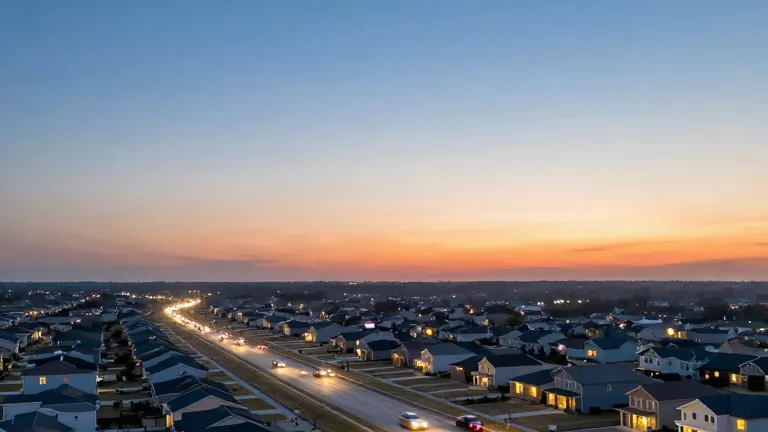
Texas suburbs are no longer safe Republican territory.
Sixteen suburban counties, defined by the Texas Tribune, have grown from one-fifth to nearly one-quarter of the state’s registered voters over the past eight years. This expansion is reshaping the political map in the Texas Triangle. The growth is driven by migration from within the state and from other regions. Comal County, located between San Antonio and Austin, saw registered voters jump 83% from 2012 to 2024. Every one of the sixteen counties added at least 30% to its voter rolls during that period.
Diversity is changing the demographic makeup of these areas at a rate nearly double the state average. In 2014, people of color constituted 40% of the suburban population. By 2024, that figure reached nearly 50%. In Collin and Fort Bend counties, where Asian residents make up 22% to 24% of the population, specific community voting patterns are influencing local races. Democrats have traditionally performed well with Indian Americans, while Vietnamese Americans have tended to support Republicans. However, recent data suggests Republicans have made gains with Indian Americans in Texas. Democrats hope to capitalize on economic frustration and recent anti-Indian sentiment from GOP activists in the Dallas area.
The shift is visible in the Dallas-Fort Worth region. In 2012, Ted Cruz won the suburban counties by 33 percentage points. By 2018, his margin dropped to 15 points. Beto O’Rourke’s campaign flipped six state House seats in the region that year. All six included suburban areas. In 2024, Cruz’s margin in these suburbs remained similar to 2018 levels, even as the rest of the state moved rightward. Collin and Denton counties stayed light red. The suburban counties have voted red in every U.S. Senate race since 1988, with the exception of Fort Bend County, which voted for a Democratic Senate candidate in 2018 for the first time in 30 years.
Political operatives attribute the erosion of the Republican margin to population growth and internal party changes. Wayne Thorburn, who served as executive director of the Republican Party of Texas from 1977 to 1983, said he sees voters who previously identified with a party representing upwardly mobile younger demographics. He described these individuals as the group President Donald Trump has lost. The 2026 election will test whether Democrats can convert suburban growth into historic vote totals. Republicans aim to hold their current levels steady to maintain control of the state.
The definition of these suburban counties excludes urban cores like Houston and Dallas. It includes Collin County, which is technically a large central metro, because of its proximity to the Dallas-Fort Worth area. Populations in these counties range from nearly 1.2 million in Collin County to 120,000 in Rockwall County. Partisanship varies widely. Fort Bend and Hays counties have narrowly favored Democrats in recent cycles. Montgomery County provided President Trump with the largest raw vote margin of any U.S. county in 2024.