Tesla Delays Unsupervised FSD to 2027, Limiting It to Robotaxi Zones
Tesla has pushed back its promise of hands-free driving for owners, restricting the feature to specific geofenced areas where its fleet operates.
By Arjun Patel ·
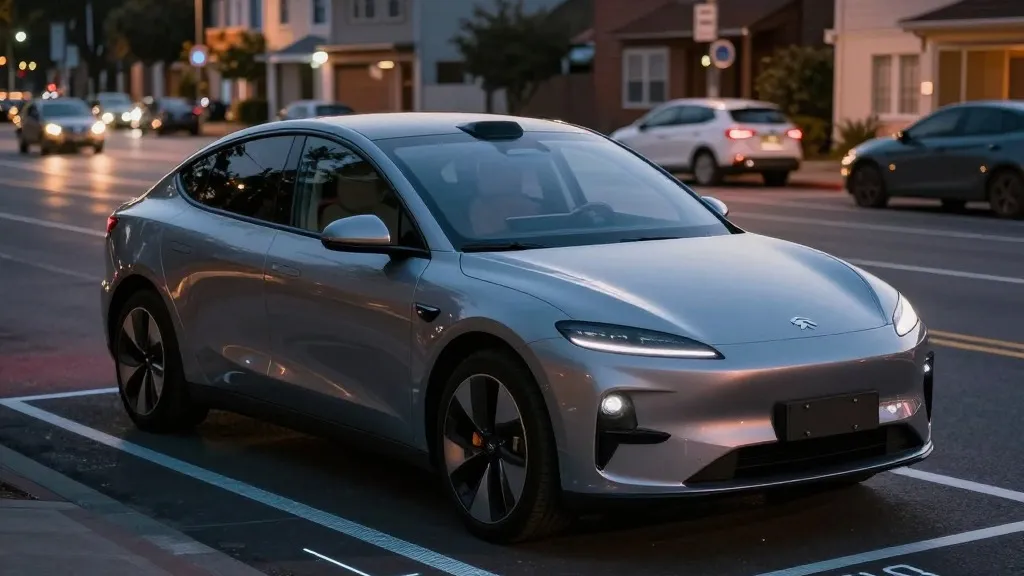
Approximately 1.1 million shares backed the question that dominated Tesla's Q3 2026 earnings call today: when can customers actually use unsupervised Full Self-Driving in their own vehicles? The answer provided by AI chief Ashok Elluswamy was the second quarter of 2027. This date marks the latest iteration of a timeline CEO Elon Musk has promised to buyers for nearly a decade, yet the details of the rollout suggest a significantly narrower scope than previously advertised.
The numbers behind the delay paint a picture of limited current capability. Tesla reported that its Robotaxi fleet reached nearly two million cumulative unsupervised miles by the end of the third quarter. This milestone came just one month after the Cybercab joined the Austin fleet. However, third-party tracking data from earlier this spring indicated that only dozens of fully driverless Teslas were on the road, a figure far below the hundreds of thousands Musk had previously envisioned. By comparison, competitor Waymo has already logged over three million miles and was operating in both Orlando and Tampa before Tesla entered those markets.
The operational reality is that Tesla's Robotaxi service currently functions in only six US metropolitan areas. Most of these service areas cover small slices of the cities. For instance, the Miami zone primarily encompasses West Miami and a strip extending toward Doral and Sweetwater. Orlando and Tampa launched with similarly restricted geofences in July. Within these boundaries, the vehicles stick to low-speed routes and largely avoid highways. In the Bay Area, the service is not even unsupervised because California regulations require a safety driver in every car, a rule Tesla must follow since it has not released data to the California DMV for a level 2 autonomous system.
Elluswamy clarified that the Q2 2027 target does not mean owners will receive a software update that allows them to sleep in the back of their cars while driving to any destination. Instead, the plan involves owners adding their vehicles to Tesla's managed Robotaxi fleet. This means an owner's car will only drive itself unsupervised within the specific zones where Tesla's Robotaxi already operates. The product is defined by Tesla's terms, not the owner's personal travel needs.
This approach contrasts sharply with the pitch sold to FSD buyers for years. Musk told investors in July 2025 that unsupervised FSD would be available for personal use by the end of that year in certain geographies. A year prior, he expressed surprise if Tesla did not have unsupervised self-driving the following year. Complicating matters, owners of the older HW3 hardware have already been informed that their computers cannot run unsupervised FSD at all, with no clear upgrade path provided.
The stakes for shareholders are high as the goalpost shifts from a car that drives anywhere to one that works as a Robotaxi inside a controlled geofence. Elluswamy reiterated that safety remains the primary bottleneck, explaining why Tesla limits operations to low-speed roads and avoids complex environments. He estimated that these safety issues might be resolved by next year, though he admitted the company is still guessing on the exact timeline.
For consumers, the move suggests that the dream of a personal autonomous commute is further away than the marketing implied. Unless an owner lives and works within one of the small designated zones, the unsupervised feature will not cover airport runs or highway road trips. The focus has shifted from personal convenience to fleet integration, raising questions about the long-term value proposition for individual buyers.
Source: Electrek