National Symphony Orchestra Plays Half Its Usual Season in Six New Venues
With the Kennedy Center closed and ticket revenue expected to drop by half, the 95-year-old group is testing audience loyalty in the D.C. area.
By Amina Kaminski ·
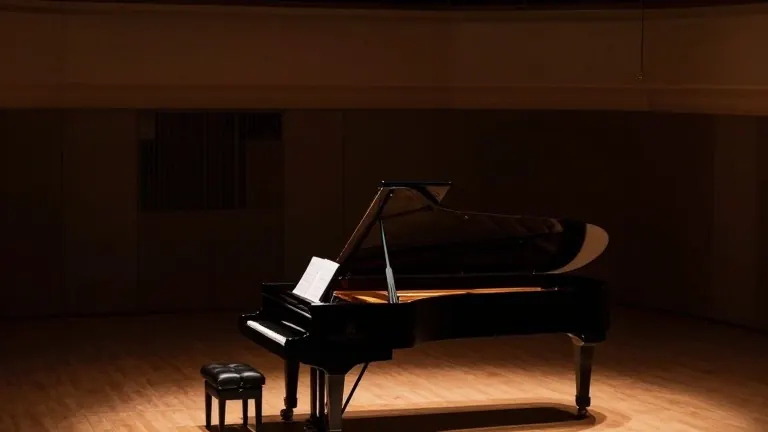
Musicians of the National Symphony Orchestra no longer have a home base in Washington, D.C. Since the Kennedy Center for the Performing Arts closed its doors on Sept. 15, the 95-year-old ensemble has had to relocate its performances to six different venues across the greater region.
The closure followed a period of falling ticket sales, public boycotts, and a federal court dispute regarding the addition of President Trump’s name to the building’s exterior. Trump assumed control of the center in early 2025 after dismissing several board members and Kennedy Center president Deborah Rutter. The change left the orchestra, which has performed at the center since 1971, without a permanent stage.
Gianandrea Noseda, the Italian conductor who has led the group for nine years, described the news of the closure as a shock. He said the lack of a home venue forced the musicians to become nomads while the future of the arts complex remained uncertain due to proposed renovations.
The orchestra faced a compressed timeline for its new season. Most symphonies announce their schedules in early spring, but the National Symphony Orchestra had to wait for budget approval from the Kennedy Center Board of Trustees. The new season was only revealed in mid-August, just six weeks before the opening concert. That first performance took place 11 days after the Kennedy Center locked its doors.
On Sept. 26, Noseda and the musicians performed at the Music Center at Strathmore in Bethesda, Md., north of the capital. The program featured new works by Carlos Simon alongside classics from Tchaikovsky and Respighi. Anne Midgette, a former classical music critic for The Washington Post, described the opening night as bittersweet, noting the difficulty of seeing a major city’s orchestra perform outside its traditional hall.
Financial pressures have intensified the uncertainty. The Washington Post reported in August that ticket revenue is expected to fall by about half, while donations are projected to drop by a quarter. These declines are attributed partly to severe cuts in the Kennedy Center’s development department. The orchestra has also lost key staff, including executive director Jean Davidson, who left in March citing the turmoil at the center.
This season, the National Symphony Orchestra plans to perform roughly half as many concerts as it does in a typical year. Rick Barber, the associate principal double bassist who joined the group in 1995, said the musicians were stunned by the closure. He described the months following the announcement as a period of anxiety but expressed belief that the orchestra will not fold.
Noseda has focused on reaching new audiences in different locations to counter the financial setback. He extended his contract with the orchestra until 2031, saying he did not want to leave during a time of crisis. He stated that as a music director, he must serve the orchestra, the music, and the community.
The group’s situation mirrors a national trend where symphonies are struggling financially, with some, such as the Phoenix Symphony, recently shutting down. Midgette noted that the cost of attending concerts has become more challenging for audiences facing high prices for gas and groceries. The upcoming season in various halls will serve as a test of how deeply the public is invested in the institution.
It remains unclear how long the National Symphony Orchestra will operate outside the Kennedy Center. The ensemble continues its reduced schedule in the D.C. area, relying on its ability to attract audiences and donors to sustain its operations.