Dating App Strategy: Upward Relaunches With Traditional Courtship Features
Match Group repositioned its 2020 launch to target Gen Z users who prioritize marriage, citing survey data that 72 percent of young singles want to wed.
By Marco Graham ·
Match Group is wagering that young Americans still prioritize traditional courtship, a bet that contradicts other demographic data showing a decline in marriage expectations. The company relaunched Upward, an app originally built for Christian daters in 2020, in September with a new focus on traditional values regardless of religious affiliation. The move aims to capture a specific segment of the Gen Z dating market.
The redesign follows Match Group’s 2026 Singles in America study, which found that 72 percent of Gen Z respondents want to get married. The same survey noted that a quarter of singles aged 18 to 34 identify with traditional values regarding family, faith, and community. Lauren DeFord, director of brand marketing at Match, described the shift as welcoming users who share these goals without necessarily leading with a faith-first mindset, while maintaining that Christian singles remain central to the platform's mission.
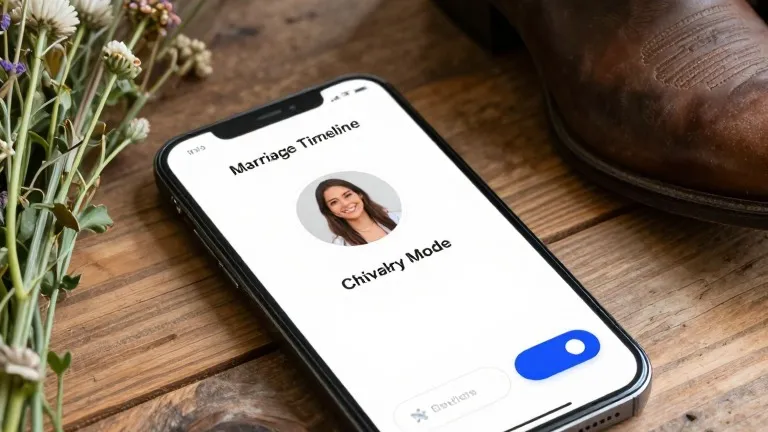
The app retains its tiered subscription model and swipe mechanics similar to Tinder, but introduces features designed to enforce traditional gender roles. Chivalry Mode prompts men to message first, a format similar to Bumble’s historical design. Marriage Timeline allows users to state their intended wedding date to potential matches. Users can also add a Faith Statement to their profiles, describing their values regarding God.
Promotional materials emphasize a retro Americana aesthetic, with a campaign titled Wanted: For Life featuring Western-style imagery. One video shows a man in a cowboy hat gifting flowers and opening a car door, set to text reading chivalrymaxxing. This marketing approach contrasts with demographic trends that suggest younger generations are becoming more individualistic.
Daniel Cox, director of the Survey Center on American Life, argues that Gen Z lacks clear relational priorities, often resulting in a hyperindividualistic culture. He notes that 44 percent of Gen Z men had no relationship experience during their teen years, a rate double that of older men. Cox views the trend toward traditional dating as a reaction to a lack of cultural scripts, though he believes the traditional model may not be ideal for many young people.
Other survey data adds complexity to Match’s strategy. A 2023 Pew Research study found that only 23 percent of adults consider marriage extremely or very important to a fulfilling life, compared to 61 percent who value close friendships. The share of high school seniors expecting to marry dropped from 80 percent in 1993 to 67 percent in 2023. Cox cautions that Match’s statistics may be skewed by age, as older generations have already completed their marriages or divorces.
User feedback since the relaunch has been mixed. Adreanna Pulliam, a 25-year-old opera singer in Bloomington, Indiana, reported encountering users who fit a conservative mold but also found the app’s features confusing. She noted that the platform allows married users to join and offers relationship options such as it’s complicated. Tauti, a social work student in California, left the app within 48 hours, citing a negative experience that turned her off Christian dating. Heidi Marais, a teacher and single mother, questioned why agnostics are permitted on the platform.
Upward did not provide active user numbers. The app has faced complaints about functionality and automatic bans since its debut, with one App Store reviewer describing it as janky as hell. Pulliam believes the app could succeed within Christian private university communities but added that it likely works best for users with a more closed mindset.