10 needles and 60 minutes: A look inside a lethal injection that failed
Medical experts are questioning the competence of the execution team involved in a recent failed attempt in Tennessee.
By Amina Kaminski ·
A lethal injection that was supposed to be fatal instead left a convicted inmate alive, and medical professionals are now scrutinizing the handling of the procedure. Christa Pike, sentenced to death for a 1995 murder, survived an administration of pentobarbital on September 30, 2026, a drug dose that is normally lethal. Following the incident, two medical experts have described the actions taken by the execution team as a level of incompetence that would be considered malpractice in a hospital setting.
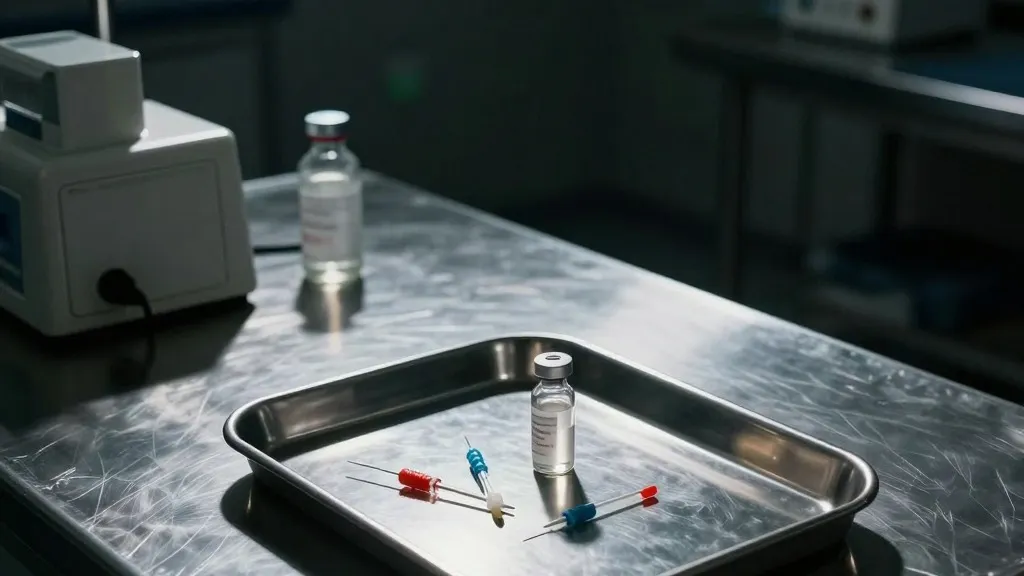
The first major point of contention involves the prolonged and difficult attempt to establish intravenous access. According to a detailed timeline filed by Pike's lawyer, Randy Spivey, the four-member IV team spent nearly an hour attempting to insert a line into Pike's arms. During this period, the team used approximately 10 needles, repeatedly poking the inmate without successfully securing a line. Throughout the attempt, Pike grimaced and reported that her arm was 'really burning,' while the team members expressed concern that her veins might have 'blown.'
The second concern centers on the specific equipment used and the failure to stop the procedure when issues arose. At one point, a team member requested a 24-gauge needle, a size that Joel Zivot, a professor of anesthesiology and surgery, identified as a catheter intended for infants or small children. Zivot stated there was 'no way' to push the required 50cc of pentobarbital through such a small opening without damaging the vein. Furthermore, Jonathan Groner, an emeritus professor of clinical surgery, noted that the protocol requires stopping infusion if a patient complains of pain, a standard that was ignored as the procedure continued.
The third issue involves the team's inability to properly assess the IV line's functionality. Despite pushing saline through the line 'with difficulty' at 7:23pm, the team proceeded to declare the IV set and began the execution process a minute later. Groner emphasized that no clinician would administer a caustic drug through an IV that does not flush easily. Zivot added that the team attempted to use ultrasound technology to find a vein, but Groner stated that the team clearly did not possess the specialist training required to operate the device effectively.
The context of this failure is significant for Pike, who was 18 years old when sentenced for the murder of a classmate. After the attempt, she spent several days on a ventilator and lawyers initially feared she was brain-dead. She was returned to her prison cell after 10 days in a hospital and can now talk and walk, though her long-term medical prospects are unknown. In response to the incident, Tennessee has suspended all executions pending a review of its protocols.
Both experts used the event to highlight systemic problems with lethal injection as a method of execution. Groner described the process as a 'medical charade' and stated that the ultimate penalty in the country is death, not torture followed by death. Zivot asserted that medicine is obsessed with safety and accountability, noting, 'You didn't see any of those things in Pike's execution chamber.' The case is prompting a nationwide reckoning regarding the administration of the death penalty.