SpaceX declines military deals while Spain advances its rocket program
A major shift in commercial launch dynamics occurs as SpaceX turns down three U.S. military contracts, coinciding with Spain's PLD Space reaching a critical integration milestone for its Miura 5 rocket.
By Khalid Rahman ·
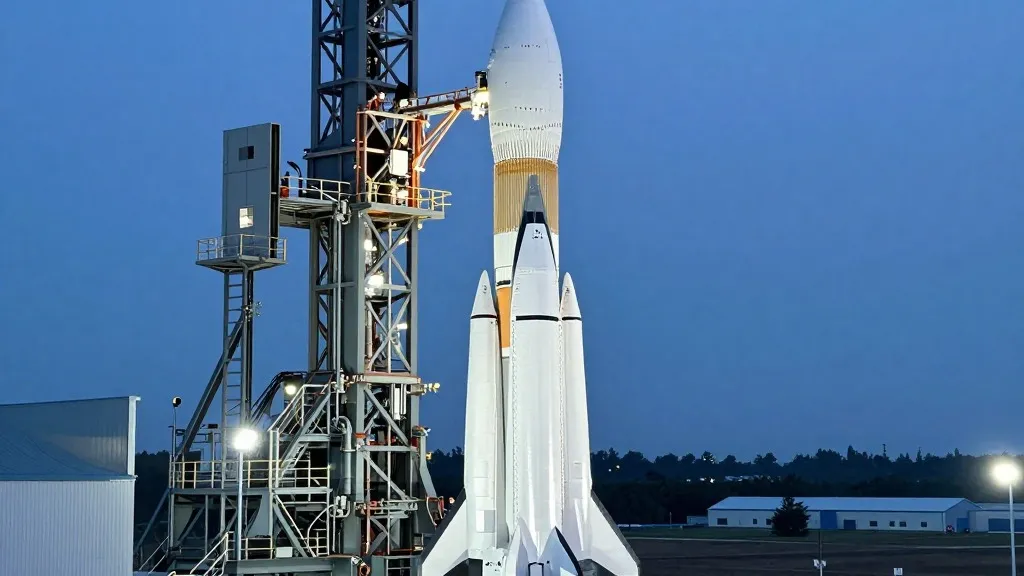
The landscape of commercial spaceflight is shifting in ways that will directly impact the cost and availability of orbital access for both government and private clients. This week brought significant developments on two fronts: a major U.S. aerospace company has signaled a change in its partnership strategy with the military, while a Spanish startup has confirmed it is on track to launch its first rocket. For ordinary observers of the industry, these moves suggest a period of consolidation and competitive differentiation among launch providers, which could influence pricing and scheduling in the coming years.
SpaceX, the dominant player in the global launch market, has reportedly declined three launch contracts offered by the U.S. Space Force. This decision marks a notable departure from the company's usual trajectory of securing large-scale government work. By turning down these opportunities, SpaceX is signaling a strategic preference, potentially prioritizing other commercial ventures or managing its production capacity differently. For the U.S. military, this means they must now seek alternative providers or adjust their launch schedules, highlighting the growing complexity of the commercial launch market where the largest provider is no longer automatically the default choice for every mission.
On the civil side of SpaceX's operations, a NASA safety panel has indicated that the company's Starship vehicle may require up to 22 in-orbit refueling stops to successfully support a lunar landing. This figure underscores the immense technical challenges inherent in deep space exploration. The need for such a high number of refueling operations suggests that the logistics of moving heavy payloads to the moon are far more intricate than previously simplified models might imply. For taxpayers and space enthusiasts alike, this detail provides a clearer picture of the complexity involved in returning humans to the lunar surface.
Meanwhile, across the Atlantic, Spain's PLD Space is making tangible progress with its Miura 5 rocket, a small-lift vehicle intended to compete in the global market. According to reports from Aviation Week, the company states that the rocket is nearing final integration. PLD Space has already manufactured three units of the Miura 5, with the current phase focused on qualifying key system elements. CEO Raúl Torres noted in a program update that this manufacturing approach has allowed their teams to work continuously across different production stages, applying lessons learned from qualification campaigns directly to the launch vehicle.
The first Miura 5 second stage is now fully integrated and has moved to the company's test facility in Teruel. Here, it will undergo a rigorous qualification campaign that includes a wet dress rehearsal and a static hot-fire test. These tests are critical steps that simulate real-world operating conditions to ensure the rocket's reliability. PLD Space is targeting a first flight for this small-lift vehicle before mid-2027, a timeline that positions it to enter the market soon and potentially offer European customers a domestic alternative to existing launch options.
The progress of the Miura 5 is not just a technical achievement but a strategic one for the European space sector. By successfully integrating and testing its hardware, PLD Space is demonstrating that European companies can compete in the fast-paced global launch industry. The use of multiple prototypes for qualification helps de-risk the initial launch, a common strategy in the aerospace industry to ensure safety and reliability. This steady progression brings the company closer to its goal of providing a viable small-lift capability.
Simultaneously, the competitive environment is heating up in Canada, where Reaction Dynamics is seeking to raise $350 million in new funding. The company aims to use this capital to expand its workforce from 68 employees to more than 350. Reaction Dynamics is developing the Aurora rocket, a small-lift vehicle expected to reach orbit in 2028. This expansion reflects the growing confidence in the small-lift market segment, which is increasingly seen as a critical entry point for new space companies.
In addition to the Aurora, Reaction Dynamics has announced plans to develop a medium-lift rocket named Borealis, with a debut targeted for 2031. This two-pronged approach allows the company to address different market segments and customer needs. By investing in both small and medium-lift capabilities, Reaction Dynamics is positioning itself as a versatile player in the global launch market. The successful raise of funds will be crucial for hiring the necessary engineering talent to meet these ambitious timelines.
These developments collectively illustrate a space industry that is becoming more fragmented and competitive. While SpaceX remains a giant, its recent decisions and technical challenges suggest that no single company holds a monopoly on future capabilities. For nations and businesses relying on space access, this competition is ultimately beneficial, driving innovation and potentially lowering costs. The next few years will be critical as these new rockets move from testing to flight, reshaping the global launch ecosystem.
As these companies work toward their respective milestones, the focus will remain on execution. Whether it is SpaceX managing its military portfolio, PLD Space completing its hot-fire tests, or Reaction Dynamics hiring its new staff, the ability to deliver on these promises will determine the next phase of commercial spaceflight. The industry is at a pivotal moment where strategic choices and technical successes will define the future of space access.
Source: Ars Technica