NHTSA Proposes National Standard for 1 Distinct Cyan Light on Robotaxis
Federal regulators are seeking to standardize the visual language of autonomous vehicles by mandating a specific blue-green signal to indicate when a human is not in control.
By Lucia Herrera ·
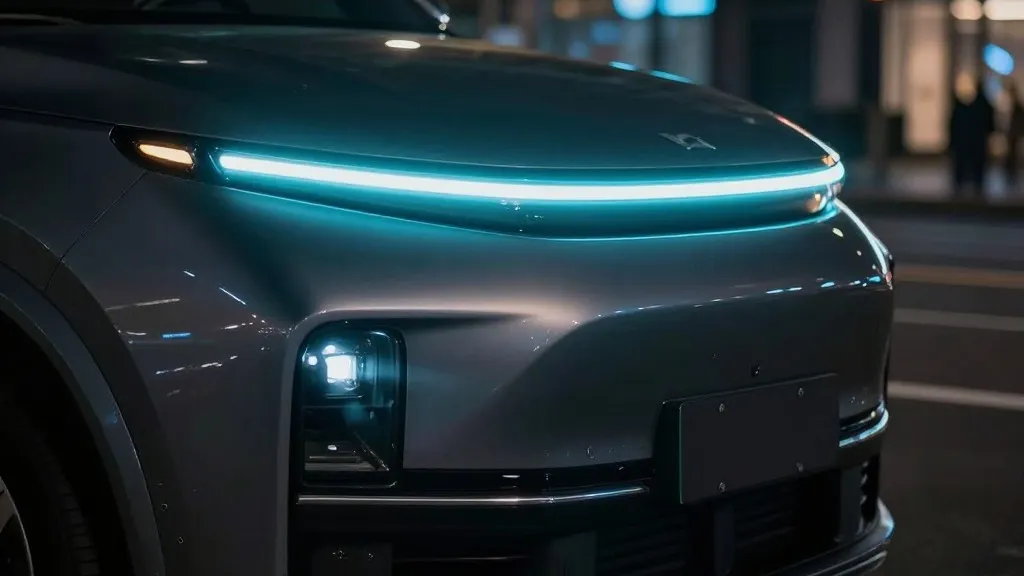
The visual language of the modern road has long been defined by red, amber, and white, but federal regulators are now attempting to add a new primary color to that palette. After years of fragmented industry experimentation and debate over how driverless vehicles should communicate their status, the National Highway Traffic Safety Administration (NHTSA) has proposed a singular, standardized solution: a distinct cyan-colored light. This move represents a significant shift in how Washington approaches the integration of autonomous technology, moving from a period of flexible, localized trials toward a unified national framework for how these vehicles signal their operational state to the rest of traffic.
The proposal, which involves rewriting Federal Motor Vehicle Safety Standard (FMVSS) No. 108, is designed to close a specific regulatory gap. Currently, there is no federal requirement dictating how an automated driving system should announce its presence. The agency argues that a consistent blue-green marker lamp will allow law enforcement and other road users to instantly recognize when a vehicle is being operated by an algorithm rather than a human. By selecting cyan, NHTSA is leveraging the existing visual spectrum of automotive lighting. Since red, amber, white, and flashing blue or red lights are already reserved for functions like braking, turning, illumination, and emergency services, the agency believes cyan fills an available visual niche without causing cognitive confusion for drivers accustomed to traditional cues.
While the proposal is not yet a mandate requiring every autonomous vehicle to install these lights, it establishes the technical rules for those who do. Under the new guidelines, cyan marker lamps would remain optional for manufacturers. However, if an automaker chooses to utilize them, the vehicle must adhere to strict federal standards regarding the light’s color, brightness, and placement. This standardization aims to prevent a fragmented market where different companies use varying shades or intensities, ensuring that a robotaxi in one city signals its status in the same way as one in another. The goal is to create a predictable visual environment for all road users.
The push for a national standard follows earlier state-level experiments, most notably Mercedes-Benz’s approval for turquoise lights on its Level 3 Drive Pilot vehicles. Although the German automaker later pivoted to a Level 2++ system and dropped the specific turquoise light concept, its initial approval served as a proof of concept for the feasibility of such signals. NHTSA is now looking to elevate this approach to a federal level, providing a clear path for major players in the autonomous space, including robotaxi operators like Waymo, Nuro, and Zoox, as well as traditional automakers like GM and Mercedes, to adopt a uniform signaling method.
Beyond adding new lighting requirements, the proposal also seeks to remove outdated regulations that were designed with human drivers in mind. Current federal rules require physical controls such as hazard switches, manual beam shifters, and turn levers to be present inside the vehicle. For a car that may have no steering wheel or pedals, these requirements are often redundant or impractical. NHTSA proposes eliminating these mandates, allowing manufacturers to design interiors without these legacy components. Additionally, the agency is updating the 12.8-volt testing standard to accommodate modern LED architectures, reducing the administrative burden on companies building next-generation lighting systems.
This regulatory update is part of a broader administrative effort by the Department of Transportation to streamline the deployment of autonomous vehicles. The overarching goal is to make it easier for manufacturers to build cars that lack traditional human-centric controls. By clarifying the rules around lighting and removing obsolete requirements, the government hopes to accelerate the transition from prototypes to mass-produced autonomous vehicles. This streamlining is intended to reduce the friction between engineering innovation and federal compliance, a friction that has historically slowed the introduction of new vehicle types.
However, the move toward flexibility comes at a time when regulators are also closely scrutinizing how existing rules are being applied. Last month, NHTSA opened an audit query into the Tesla Cybercab, examining the technical data and processes Tesla relied upon when certifying the vehicle. The focus of this investigation is the absence of certain design features, such as sideview mirrors, pedals, and a steering wheel, which are traditionally required under FMVSS. This simultaneous push to rewrite rules for the future while auditing compliance with current rules highlights the tension agencies face as they attempt to balance innovation with safety.
The proposed changes to FMVSS No. 108 mark a pivotal moment in the regulatory landscape for autonomous driving. By defining a specific visual signal and removing barriers to driverless design, NHTSA is attempting to create a stable foundation for the industry. While the cyan light may seem like a minor technical detail, it symbolizes a larger shift toward standardized, federally regulated autonomy. As the proposal moves through the rulemaking process, it will set the stage for how the next generation of vehicles interacts with the roads, ensuring that the signal for "I’m driving" is unmistakable and consistent nationwide.
Source: The Verge