Google TPUs Hit Meta Production as First External Sale Challenges Nvidia Grip
Meta is now running Google's AI chips in live production, marking a major shift in the hardware market and a direct challenge to Nvidia's dominance.
By Eduardo Salazar ·
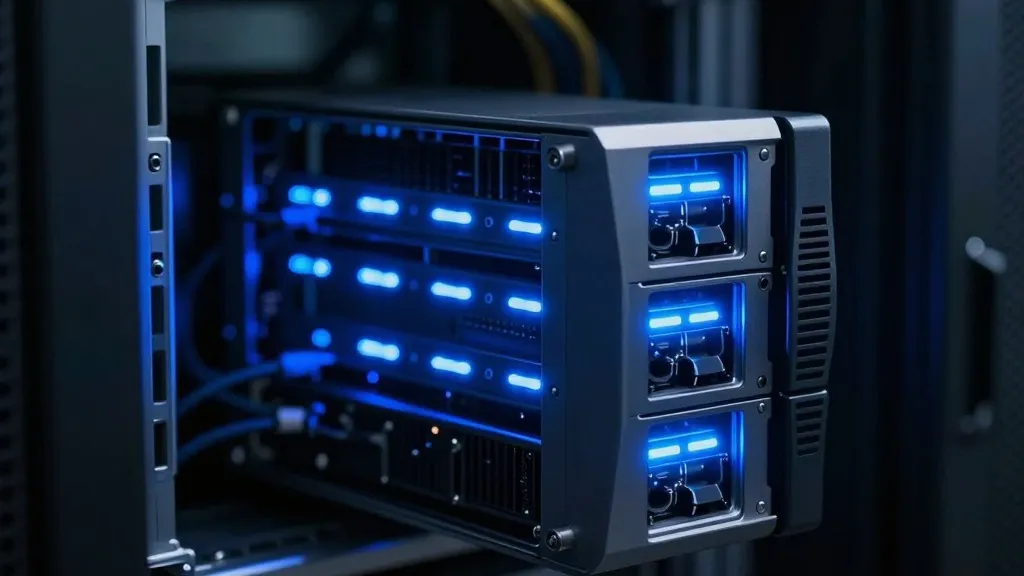
700 tokens per second. That is the speed a single user can now achieve on Google's seventh-generation Ironwood TPU, a figure that has sent shockwaves through the AI infrastructure sector. This performance benchmark, achieved by Inferact using a tuned vLLM setup, marks a pivotal moment for Google's custom silicon. The chip is no longer just an internal tool for Big Tech. It is now a production-ready option for one of the world's largest tech giants, Meta.
The announcement, released on Google's developer blog, confirms that Meta is running AI workloads in production using the new PyTorch-native version of the SGLang inference engine. This is a significant departure from previous setups. Until now, running these engines on TPUs required Google's JAX framework. The new versions allow the hardware to function as a native option for PyTorch without extensive code rewriting. This move effectively opens the door for external customers to use Google's chips, a first in the company's history.
Zongwei Zhou, Meta's PyTorch-TPU lead, confirmed the live status of the system. He stated that SGLang-TorchTPU is running in production at Meta today. Zhou credited a close three-way collaboration between Meta, Google, and the SGLang team for the success. His team operates out of RadixArk, a startup founded by the creators of SGLang. They built the engine in partnership with Google and Meta. Zhou described the result as a remarkably mature, PyTorch-native serving stack for the social media giant.
Jana van Greunen, director of PyTorch engineering at Meta, emphasized the strategic importance of this move. She noted that Meta cannot be constrained by a single hardware architecture. According to Van Greunen, the new TorchTPU enables the company to deploy PyTorch workloads directly to Google TPUs. Google stated that it co-developed this technology with Meta's PyTorch team. This partnership appears to be a direct response to Meta's historical preference for PyTorch over JAX, a framework Google has long pushed for its own hardware.
This is not Meta's first attempt to integrate Google's technology. The company used an older bridge called PyTorch/XLA between 2020 and 2023. However, those contracts were eventually canceled. Google has now labeled PyTorch/XLA a predecessor to the new TorchTPU. Reports suggest that negotiations last year included Google Cloud TPU rentals for 2026, with potential purchases in 2027. Meta reportedly signed a multi-year rental agreement, though the exact location of these production TPUs remains unclear.
The timing of this announcement is highly strategic. It came one day after Amazon announced it was open-sourcing TorchNeuron. This is Amazon's native PyTorch backend for its Trainium2 and Trainium3 chips. Both Google and Amazon are making moves at the same PyTorch Conference. Analysts believe these actions are aimed at loosening Nvidia's software lock-in. By making their chips more compatible with the industry-standard PyTorch framework, they are trying to reduce the friction for companies considering a switch.
Performance metrics are central to this competition. Inferact, which helped Google build vLLM-TorchTPU, reported that the Ironwood TPU tops 700 tokens per second for Moonshot AI's Kimi K3 model. This test used 16 Ironwood chips with speculative decoding. In comparison, 16 Nvidia GB200 chips reached 452 tokens per second in a similar setup. The new kernels for Kimi K3 and Qwen 3.8 27B deliver roughly 1.4 to 2 times the throughput of the GB200 baseline at small batch sizes, even without speculative decoding.
The ecosystem around these chips is also expanding. SGLang-TorchTPU will continue adding new models, starting with DeepSeek V4.1 Flash and Reflection Beam. The team is working toward Day 0 TPU support for new open models. This means support will be available on release day, a goal targeted for the first quarter of 2027. RadixArk, Google, and Meta plan to share more details at the SGLang Summit 2026, scheduled for November 12 and 13 in San Francisco.
These developments signal a changing landscape in AI hardware. For years, Nvidia has held a dominant position due to the tight integration of its chips with popular software frameworks. By making TPUs native to PyTorch, Google is removing a key barrier to entry. Meta's production use of these chips validates the technology. As other cloud providers follow suit with their own native backends, the market may see a significant shift away from single-vendor dependency. The battle for AI infrastructure is becoming a war of software compatibility.
Source: Tom's Hardware